
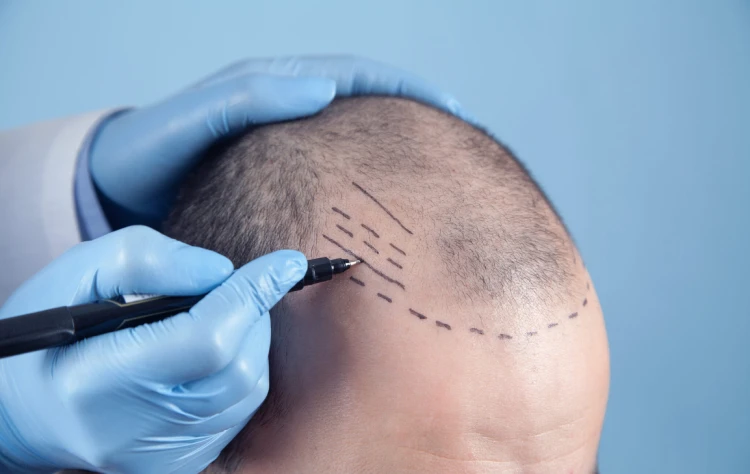
What To Expect At A Hair Restoration Consultation
An examination and a plan, not a sales appointment. Here is what a good one contains, and what should make you wary.
A consultation has a job: establish what is causing your hair loss, measure what you have to work with, and produce a plan. If it does not do those three things it has not happened, whatever else was discussed.
History first. When it started, how quickly it has moved, what runs in your family, what you have already tried, what medication you take. Photographs from five and ten years ago are more useful here than anything you can say — they show trajectory rather than a snapshot.
Then examination. Scalp and donor zone under magnification. Density is measured, not eyeballed: follicular units per square centimetre, hairs per unit, hair calibre, and the contrast between hair and skin. This is what determines your options, and it cannot be done from a photograph or over the phone.
Then an honest read. Whether you are a candidate, whether now is the right time, and what the realistic ceiling is. A plan should state what is being prioritised and what is deliberately being held in reserve for future loss.
What should make you wary: a graft count quoted before anyone examined you, pressure to book on the day, a discount that expires, no discussion of whether your loss is stable, and vagueness about who is accountable for the result at twelve months. That last one is worth pressing anywhere, including here.
And a legitimate outcome you should be prepared for: not yet. If loss is still moving quickly, medical stabilisation usually comes first — occasionally for a year or more. A clinic that never reaches that conclusion is not exercising judgement.
Reviewed by Dr Jawdat Abboud, MD. Educational content — not a diagnosis and not a substitute for examination by a physician. Individual results vary.
Where do you actually stand?
Five visual questions, about two minutes, and a straight read on candidacy.
Comments
5 responses to “What To Expect At A Hair Restoration Consultation”
[…] hair restoration provides an excellent option for individuals in the early stages of hair loss or thinning. Whether you’re […]
[…] (Platelet-Rich Plasma) therapy is an innovative, non-surgical method gaining popularity for hair restoration. The treatment involves drawing a small amount of your blood, processing it to concentrate the […]
[…] but these often only offer short-term improvements or don’t target the root cause. Hair restoration treatments work by stimulating the hair follicles, encouraging natural regrowth. These treatments […]
[…] treatments, hair transplants offer a lasting solution by addressing the root of the problem. They restore natural hair volume and density, helping you feel comfortable in your skin once more. The results are subtle yet […]
[…] environment for hair. Treatment consistency enhances results and builds confidence throughout the hair restoration […]