
What A Complete Hair Restoration Plan Looks Like
Surgery is one component. A plan that consists only of surgery is not a plan.
The single most common structural mistake in hair restoration is treating the procedure as the whole intervention. It is one component of something that has to work for thirty years.
Component one: diagnosis. Establishing what is actually causing the loss. Pattern baldness, telogen effluvium, traction alopecia, scarring alopecia and nutritional or endocrine causes look superficially similar and diverge completely in treatment. Some of them are reasons not to operate at all.
Component two: stabilisation. If loss is progressing quickly, slowing it comes before moving anything. Operating into active loss produces a result that looks worse in five years than doing nothing would have.
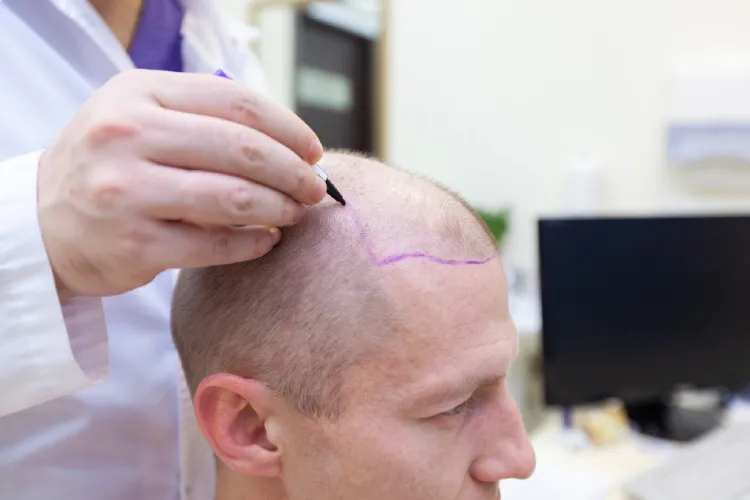
Component three: the surgical plan. Not just a graft count. Which zones are prioritised, what hairline height is appropriate for a face that will keep ageing, how extraction will be distributed across the donor zone, and how much supply is deliberately reserved for later.
Component four: medical maintenance. Native hair around the grafts still carries the genetic sensitivity it always had. Without a plan for it, a good transplant ends up surrounded by continuing loss.
Component five: follow-up. The result is assessed at twelve to eighteen months, with checkpoints along the way. Problems surface around month eight, which is when somebody needs to examine your scalp under magnification and say why. This is the component that quietly disappears when surgery is bought as a package in another country.
Any plan missing two or more of these is not comprehensive, however good the surgery itself is.
Reviewed by Dr Jawdat Abboud, MD. Educational content — not a diagnosis and not a substitute for examination by a physician. Individual results vary.
Where do you actually stand?
Five visual questions, about two minutes, and a straight read on candidacy.
Comments
5 responses to “What A Complete Hair Restoration Plan Looks Like”
[…] Whether opting for a surgical procedure or a cutting-edge non-invasive technique, permanent hair restoration offers a chance to reclaim a natural, full head of hair that can improve both appearance and […]
[…] therapy is considered one of the least invasive hair restoration methods. There’s minimal recovery time, and results typically begin to show in a few months. Many […]
[…] therapy is considered one of the least invasive hair restoration methods. There’s minimal recovery time, and results typically begin to show in a few months. […]
[…] Hair restoration treatments should be evaluated based on their long-term benefits. Hair transplants offer permanent results in the treated areas, often with minimal maintenance. PRP therapy, while effective, requires consistent sessions to maintain results and stimulate ongoing growth. […]
[…] Moreover, hydration complements supplement efficacy, ensuring the best results from your hair restoration […]