
Your hairline, rebuilt by hand.
Follicular unit extraction — planned around the donor supply you actually have, not sold by the graft.
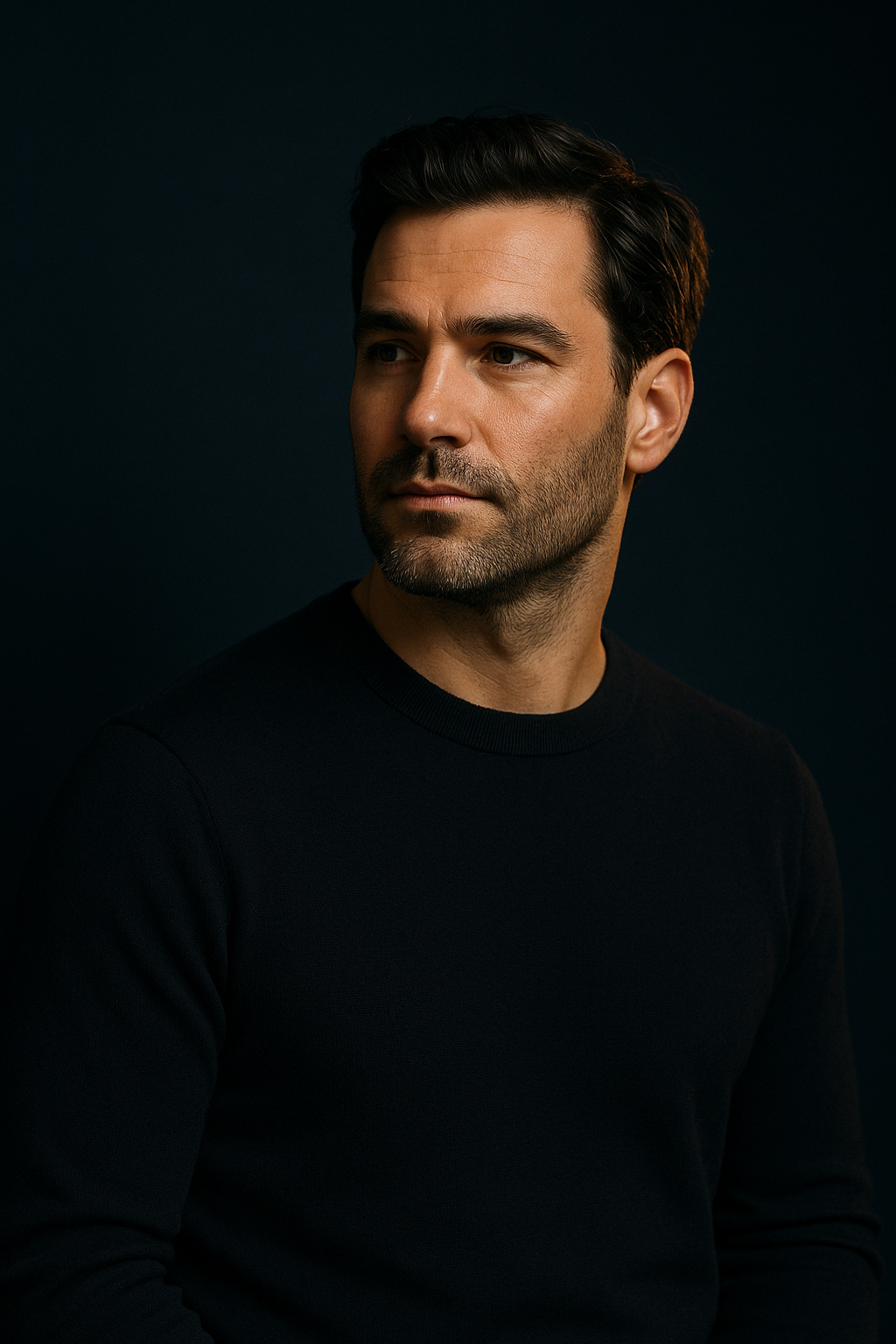
A practice, not a hair mill.
Oak Brook Hair Transplant is a single-location surgical practice on West 22nd Street, twenty minutes west of Chicago and inside an hour of most of DuPage, Cook and Will County. One address. One physician directing care. The same faces at your twelve-month follow-up as at your consultation.
We perform two things — follicular unit extraction and platelet-rich plasma — and we are deliberate about that. Hair restoration is an industry where the number of branded technique names a clinic advertises tends to move in the opposite direction to how straight the answers are.
What that buys you is unglamorous and it is the whole point: a physician you can name, a donor supply spent carefully rather than quickly, and someone in the room whose interest in your fifties is the same as yours.
The things worth checking.
Not claims about how good the results are — you can look at those yourself further down. These are the structural facts about how this practice is set up, which are the ones that actually predict how it will go.
Illinois-licensed physician
Care here is directed by Dr Jawdat Abboud, MD — a named, licensed physician accountable to the Illinois medical board, not an unnamed clinic brand.
One location, not a chain
Suite 205C on West 22nd Street. The consultation, the procedure and every follow-up happen in the same building, with the same people.
Two procedures, on purpose
FUE and PRP. No FUT, no strip, no linear scar, and no menu of renamed techniques designed to make a comparison impossible.
A finite donor supply, respected
Published guidance puts a safe lifetime supply at roughly four to eight thousand follicular units. We plan against that number, not against what you would agree to today.
Twelve to eighteen months of follow-through
A transplant cannot be judged before then. You are seen through the shedding phase and the regrowth, not handed a result at week two.
The freedom to be told no
Surgery is the wrong first move for a meaningful share of the people who ask about it. Hearing that is a real outcome of a consultation here.
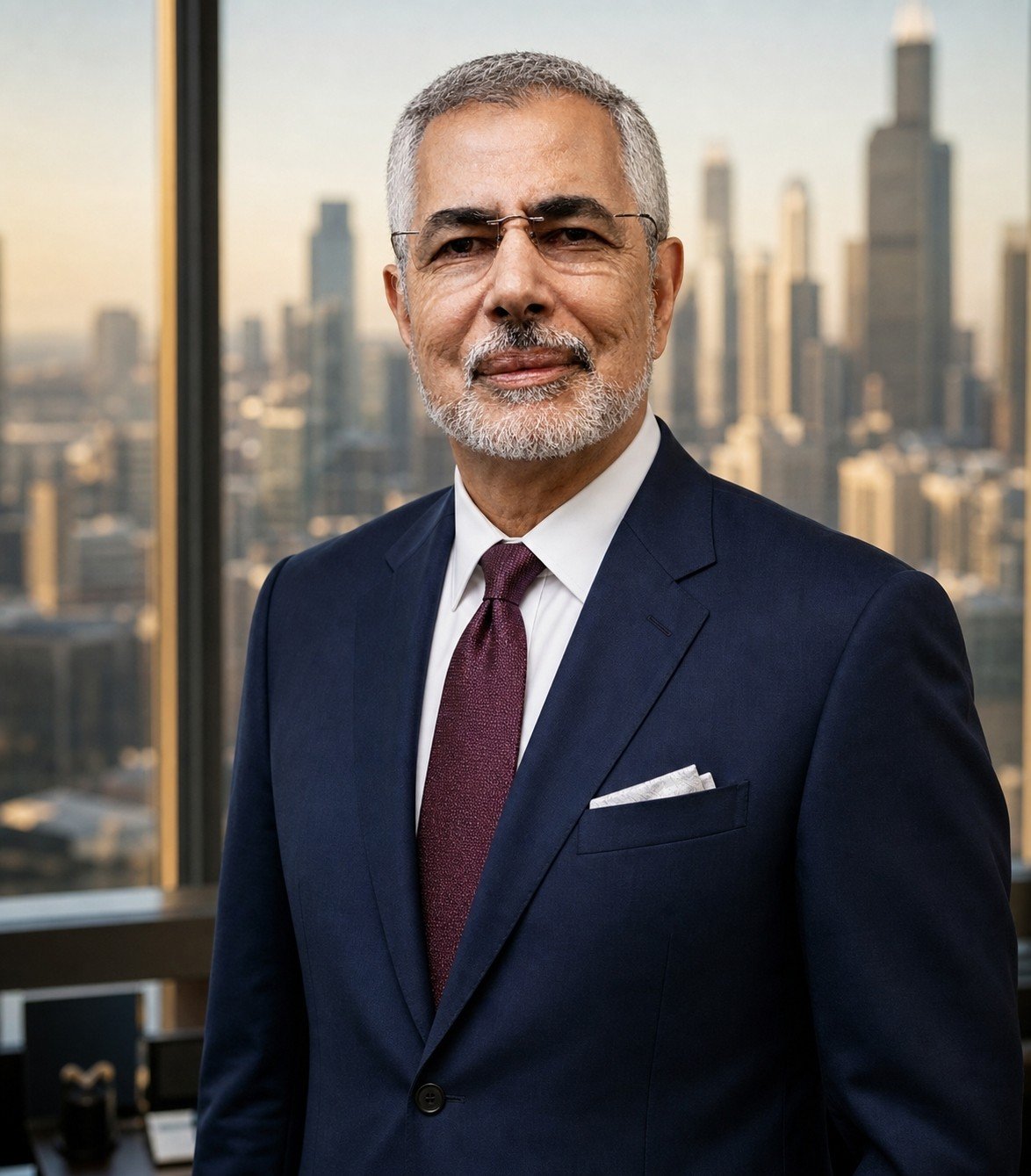
Dr Jawdat Abboud, MD
Care here is directed by a named, Illinois-licensed physician. Not a brand, not a package.
- Doctor of Medicine — University of Damascus
- Residency — Cook County / John H. Stroger Jr. Hospital, Chicago
- Board certified in Internal Medicine
- 20+ years of medical practice
Four positions we will not move off.
Every clinic says it is different. These are the four specific places where our advice will diverge from a high-volume operation, and they are the four places it costs us money to hold.
We plan for the man you will be at sixty
The easiest way to sell a hair transplant is to place the hairline low and fill the crown now. It photographs beautifully at six months and it spends the donor hair you will need in twenty years. Every plan here is built backwards from what you will still have in reserve, which sometimes means doing less than you came in asking for.
We would rather stabilise you than operate on you
Grafts placed into a pattern that is still actively receding leave an island of transplanted hair with a new gap opening behind it. If your loss is moving, medical therapy usually comes first — sometimes for a year or more — and that is not a delay tactic, it is the difference between one procedure and three.
One technique, applied seven ways
Hairline, temples, frontal third, mid-scalp, crown, eyebrows and beard are all the same follicular unit extraction. What changes is which units are used, at what angle and in what order. A practice offering six branded technique names is usually selling the names.
You can still reach us afterwards
A transplant is judged at twelve to eighteen months, not at week two. The people who plan your case are the people you see through the shedding phase, the regrowth and the point where it can finally be assessed — in the same suite, with your own photographs on the screen.
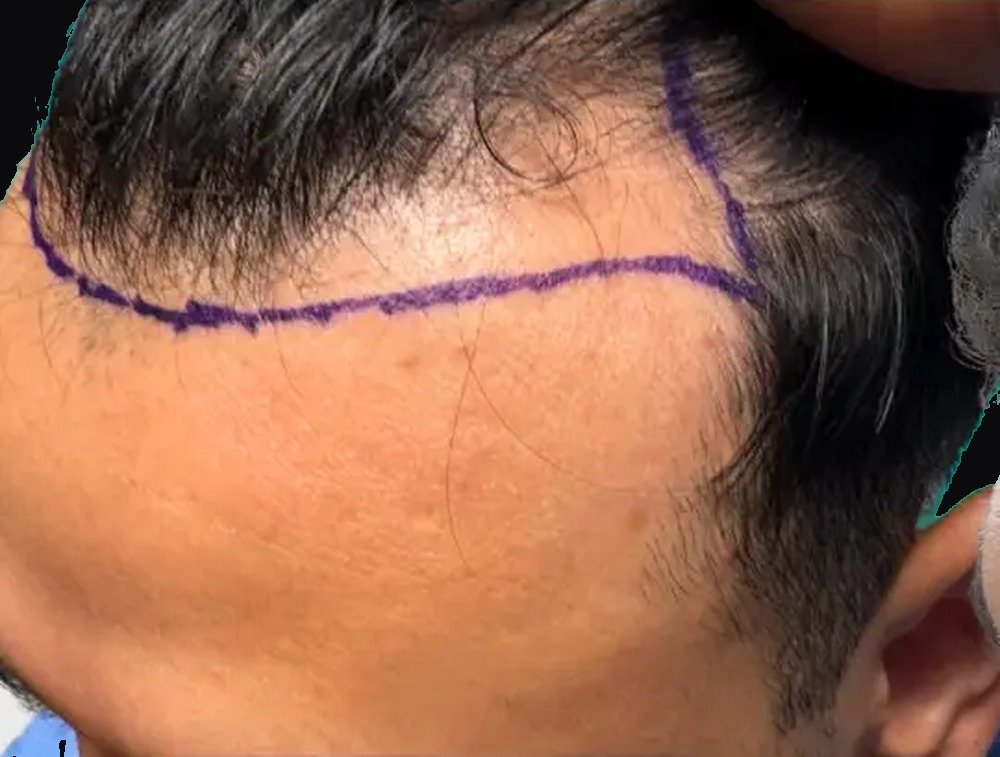
Drag to see the difference.
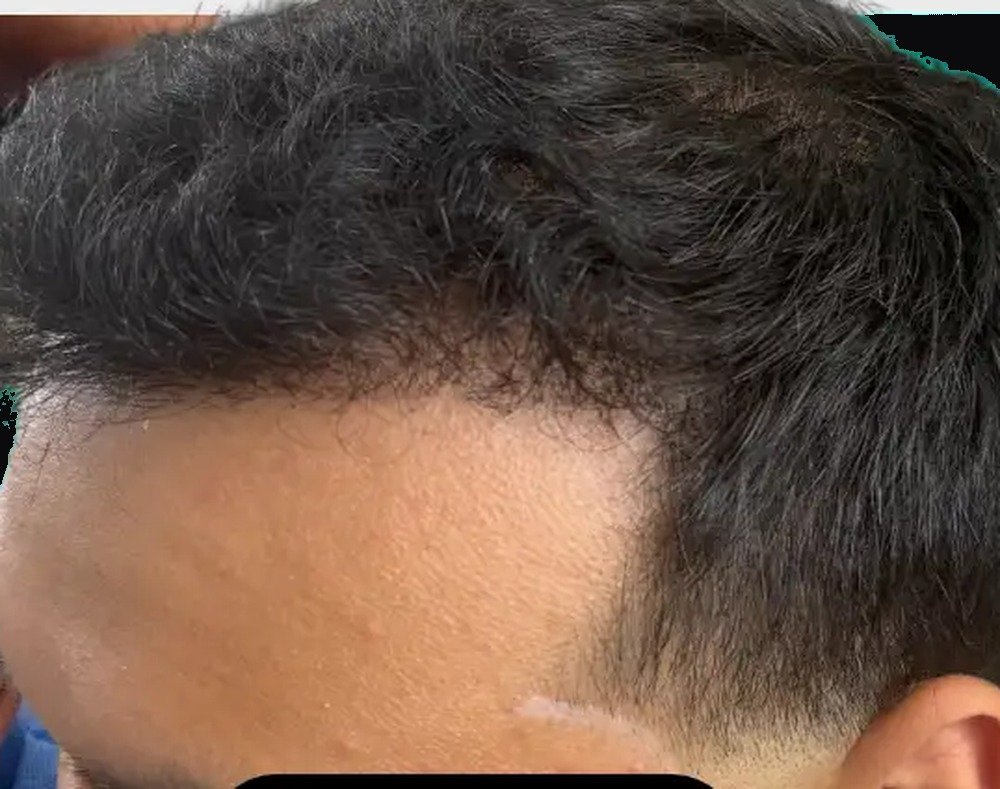
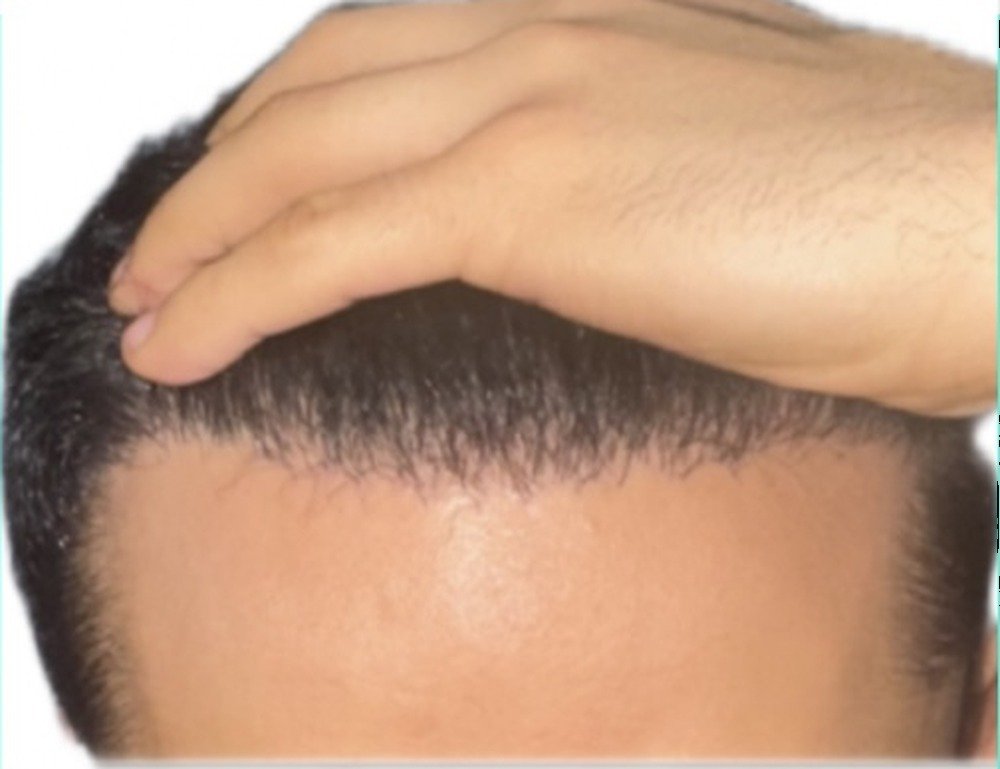
Unretouched clinical photography. The ink you can see in the before frames is the hairline being designed by hand, before a single graft is placed.
 BeforeAfter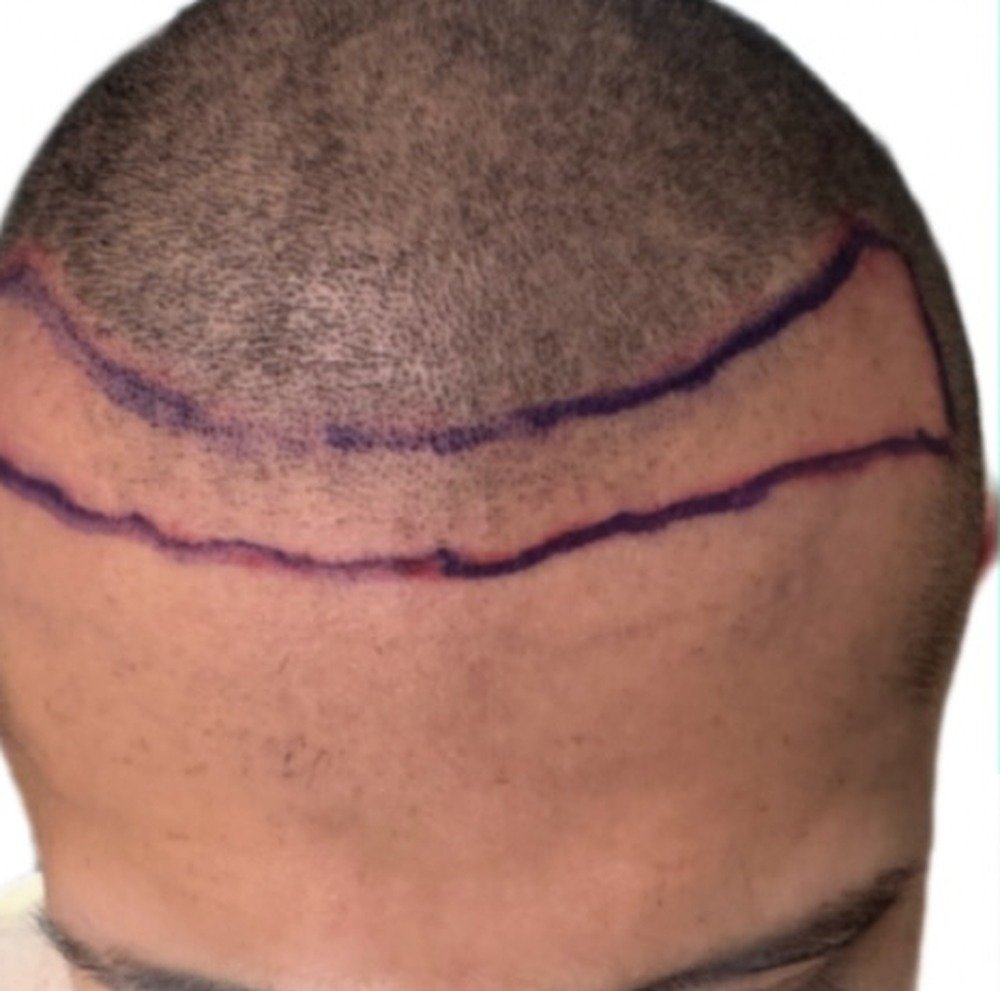
 BeforeAfter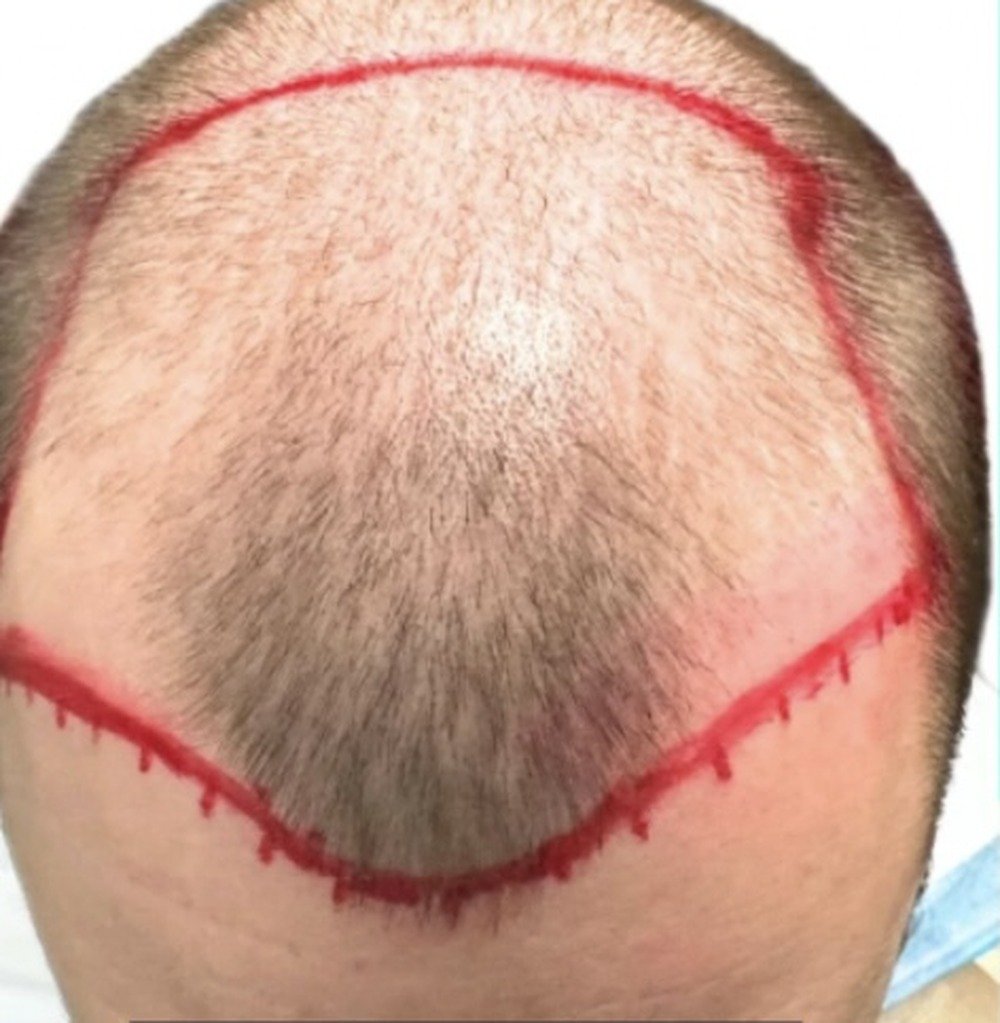
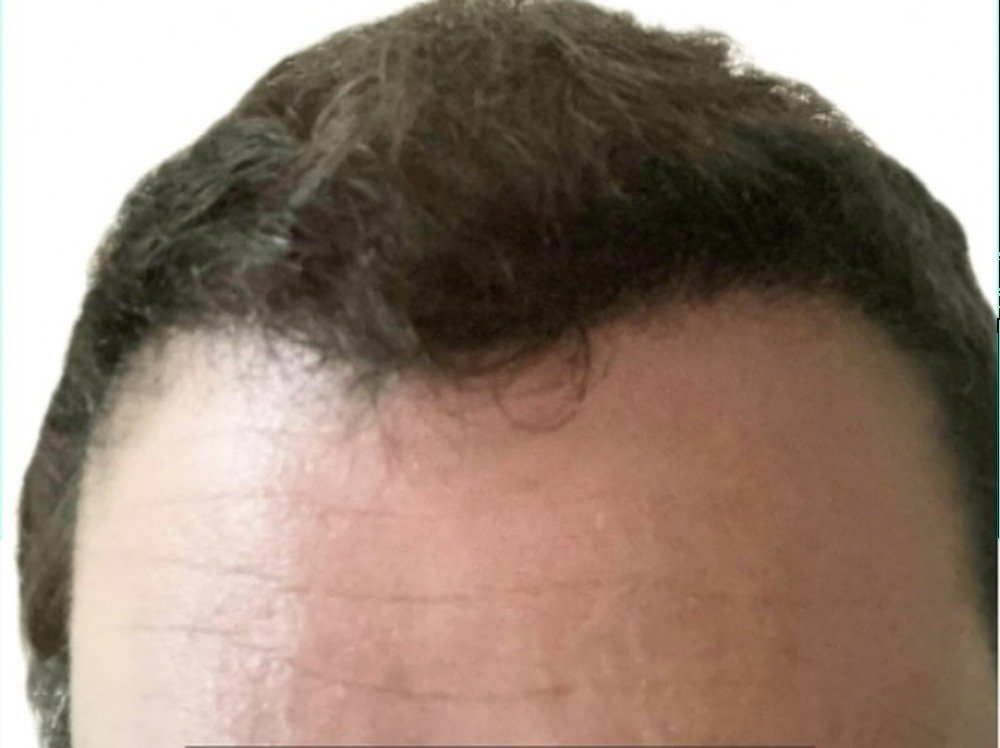 BeforeAfter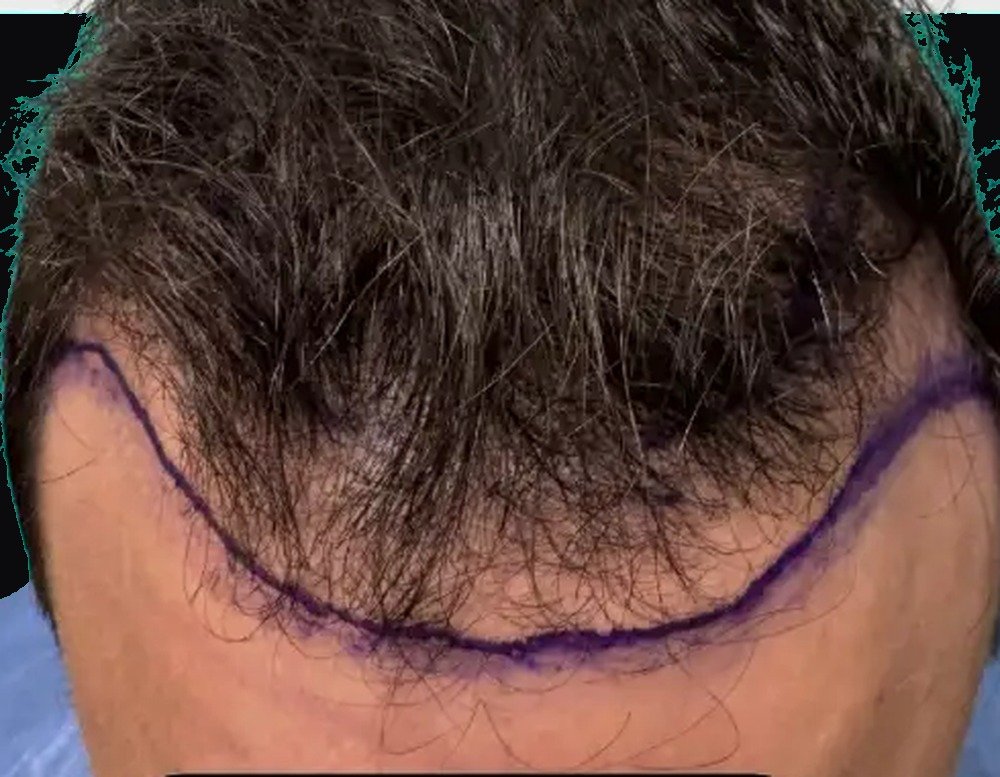
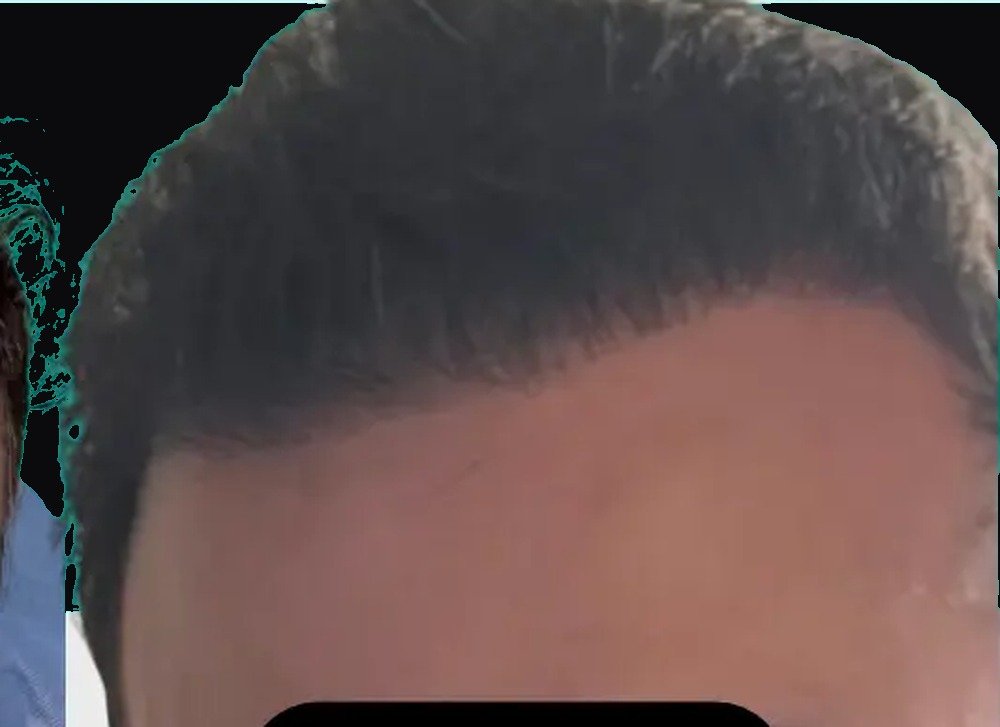 BeforeAfter
Individual results vary. These photographs show outcomes for these specific patients and do not predict yours. Candidacy is determined only by physical examination.
Tap the area that bothers you.
FUE is one procedure applied to different areas — scalp, eyebrows, beard — and each behaves differently. Different graft types, different priorities, different honest answers. Start with yours.
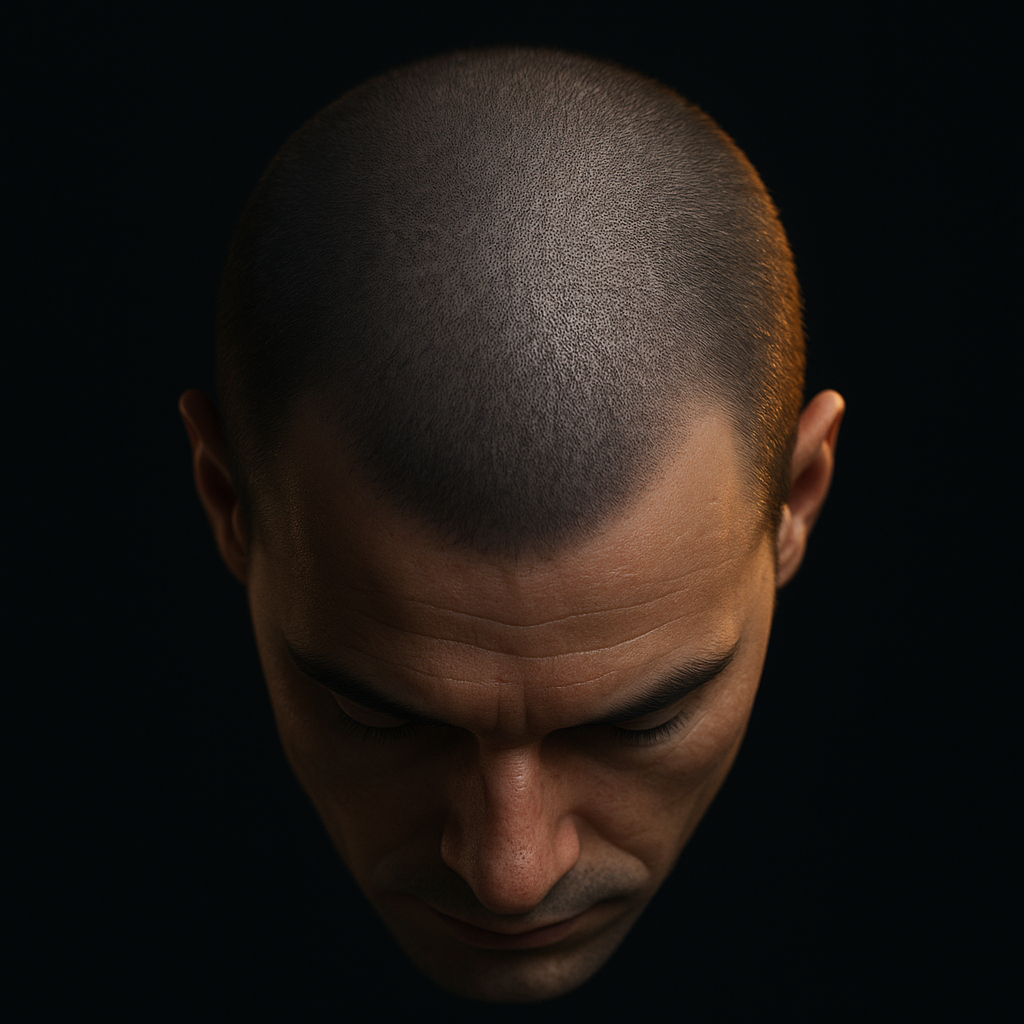
Looking down at the top of the head. Tap an area to add or remove it.
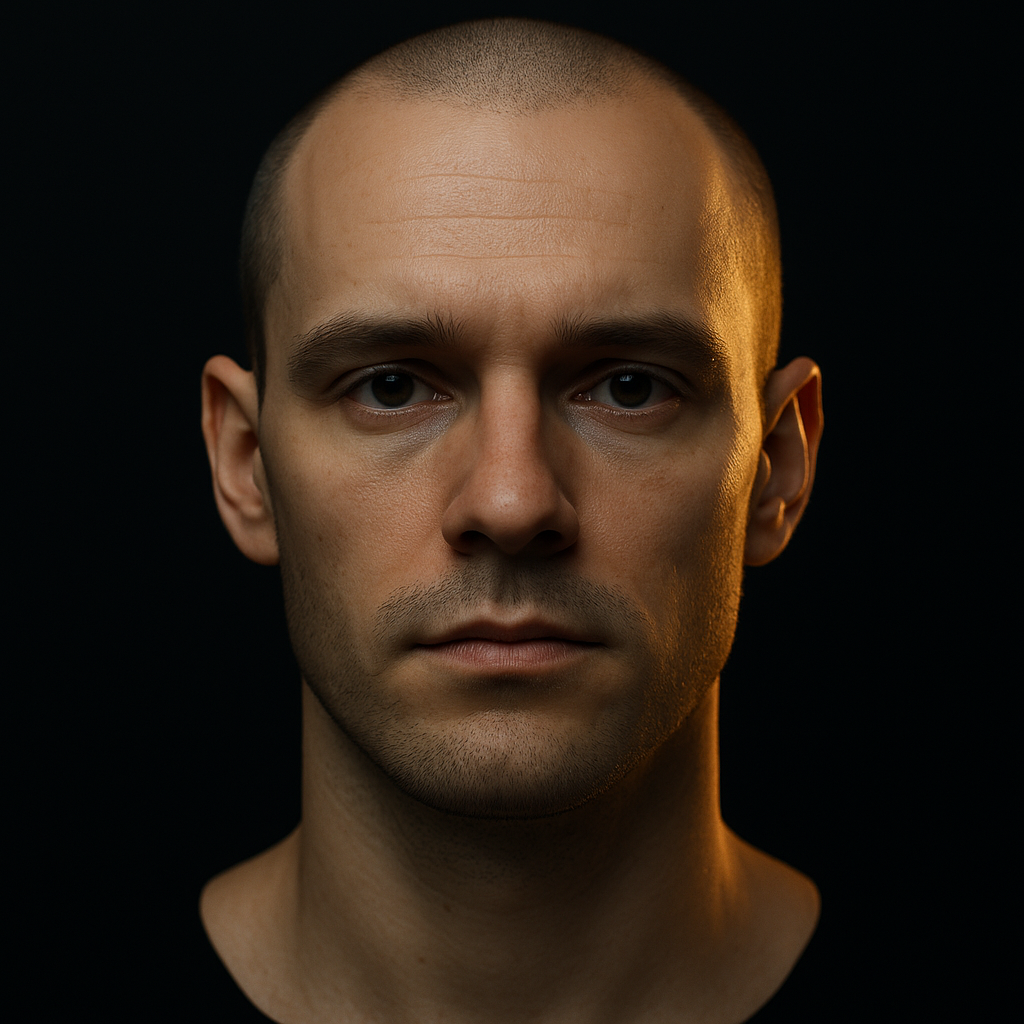
Facing forward. Eyebrows and beard. Tap an area to add or remove it.
Seven areas, one technique.
We perform follicular unit extraction and PRP — not a menu of competing techniques. The same procedure restores a hairline, a crown, an eyebrow or a beard. What changes between them is the plan, not the technique.
Select an area on the scalp or from the list. You will get what we actually do there, what is realistic, and the part most clinics leave out.
- FUE and PRP only
- No FUT, no strip scar
- Care directed by a licensed physician
Frontal hairline
The line that frames your face — and the first thing anyone reads as natural, or not.
Rebuilt almost entirely from single-hair follicular units, set at a shallow angle in a deliberately irregular line. A hairline that is too straight, too low or too dense at the leading edge is the single most recognisable sign of surgical work, and it cannot be undone by adding more grafts later.
A hairline is designed for the face you will have at sixty, not the one you have today. Placing it low looks impressive in a photograph at six months and borrows density you will want behind it at fifty.
- Single-hair units at the edge
- Designed by hand before any graft is placed
- Final density at 12 to 18 months
Temples
The two receding corners beside the hairline. Small in area, disproportionate in effect.
Temporal points are rebuilt with fine single hairs laid at a very sharp angle, so they sit almost flat against the scalp. Restoring them is often what makes a face read as younger, even when the number of grafts involved is modest.
Temples are easy to overdo. An aggressively rebuilt temple point looks striking at first and ages badly, because the surrounding hairline keeps receding around it.
- Sharp angles, fine single hairs
- Often a modest graft count
- Frames the whole face
Frontal third
The zone directly behind the hairline. In most plans, the first priority.
Denser two and three-hair units go here, behind the single-hair transition. The frontal third does most of the visible work — it is what you see in the mirror, in photographs, and what someone sees across a table.
If your donor supply is limited, this is almost always where it should be spent first. Coverage at the front changes how you look far more than the same number of grafts spent at the back.
- First priority in most plans
- Two and three-hair units
- Highest visible return per graft
Mid-scalp
The bridge between the front and the crown, where a thinning band tends to open up.
Grafting here closes that gap so a restored front does not sit on an island of thin hair. It is usually planned together with the frontal third rather than on its own.
Where native hair is still present, adding grafts can trigger shock loss — a temporary shed of hair you still have. It grows back, but you should hear that before the procedure rather than three weeks after it.
- Usually planned with the front
- Shock loss is temporary
- Medical therapy often runs alongside
Crown / vertex
The whorl at the back. The area people underestimate most.
The crown is a spiral on a curved surface, so a gap shows from more angles and it consumes grafts faster than the front for the same visible gain.
The crown is often the honest not yet. If your loss is still moving, filling it early spends donor hair you will want at the front later. Sometimes the right answer is to stabilise medically first — that is a real outcome of a consultation here.
- Highest graft cost per visible result
- Often staged, sometimes deferred
- Stabilise first if loss is active
Eyebrows
Thin, over-plucked or scarred brows — the feature that changes a face fastest.
Brows are rebuilt one hair at a time, taken from the scalp and set at an angle so flat the hair lies almost against the skin. Direction is everything here: the inner third points up and out, the tail sweeps down. Get the angle wrong and it reads as a strip of scalp hair on a forehead. Commonly published work sits at roughly 250 to 400 grafts per brow.
Because the hair comes from your scalp, it keeps growing like scalp hair — you will trim your eyebrows every few weeks for the rest of your life. Nobody enjoys hearing that beforehand, and everybody should.
- Single hairs, one at a time
- Angle matters more than count
- Needs trimming, permanently
Beard
Patchy cheeks, a gap in the jawline, a moustache that never filled in.
The same FUE procedure, moved to the face: single-hair grafts placed at a sharp downward angle across cheeks, jawline, chin and moustache. It can be a full beard or just the patch that bothers you. Published figures put a full beard at roughly 1,500 to 3,000 grafts, and a goatee or single patch at far fewer.
Beard grafts come out of the same finite scalp donor supply as your hairline. If your hair is also thinning, spending donor hair on a beard now is a decision about your fifties, not just about this year. Worth deciding the order before you start either.
- Same donor supply as your scalp
- Full beard or a single patch
- Shaves and grows like a beard
Thinning, not bald
Hair is still there but finer, and the part is widening.
This is where PRP belongs rather than surgery. Platelet-rich plasma is drawn from your own blood, concentrated, and injected into the thinning scalp to support follicles that have miniaturised but have not yet been lost. It is a course of treatments, not a one-off.
PRP does not create hair where the follicle is gone, and it is not a substitute for a transplant if you are already bald in an area. What it can do is protect what you still have while you decide.
- Uses your own blood
- For follicles that are thinning, not gone
- A course, not a single visit
Send me the plan for this area
We will email you what is involved for this area, what recovery looks like, and what to ask any clinic before you book. No cost, and no obligation to come in.
Graft planner
Select the zones you want treated, set a density, and get a grounded graft estimate — with a straight answer on whether your donor supply can actually cover it.
Open the planner ToolHair loss assessment
Five visual questions on your pattern, your donor area and how fast it has been moving. A straight read on candidacy in about two minutes.
Start the assessment HubResource centre
Every tool and explainer in one place — the Norwood scale, donor supply, recovery week by week, and a printable checklist for comparing any clinic.
Browse the toolsYour donor area is finite. Spend it once.
The hair on the back and sides of your head is the only hair that resists DHT, and it is a fixed budget. Published guidance in the ISHRS Hair Transplant Forum International puts a typical safe lifetime supply somewhere between four and eight thousand follicular units — and warns that taking more than twenty to thirty percent from a single zone in one sitting risks permanent, visible thinning.
So the number that matters is not how many grafts a clinic will sell you today. It is how much you will still have in reserve at fifty. Sometimes the right answer is to wait, or to stabilise medically first. That is a real outcome of a consultation here.
Source: ISHRS, Hair Transplant Forum International — Safe Donor Follicle Harvesting in FUE
Two procedures. Done properly.
We are not a menu. Follicular unit extraction is the surgery, and platelet-rich plasma supports the hair you still have. That is the whole offering.
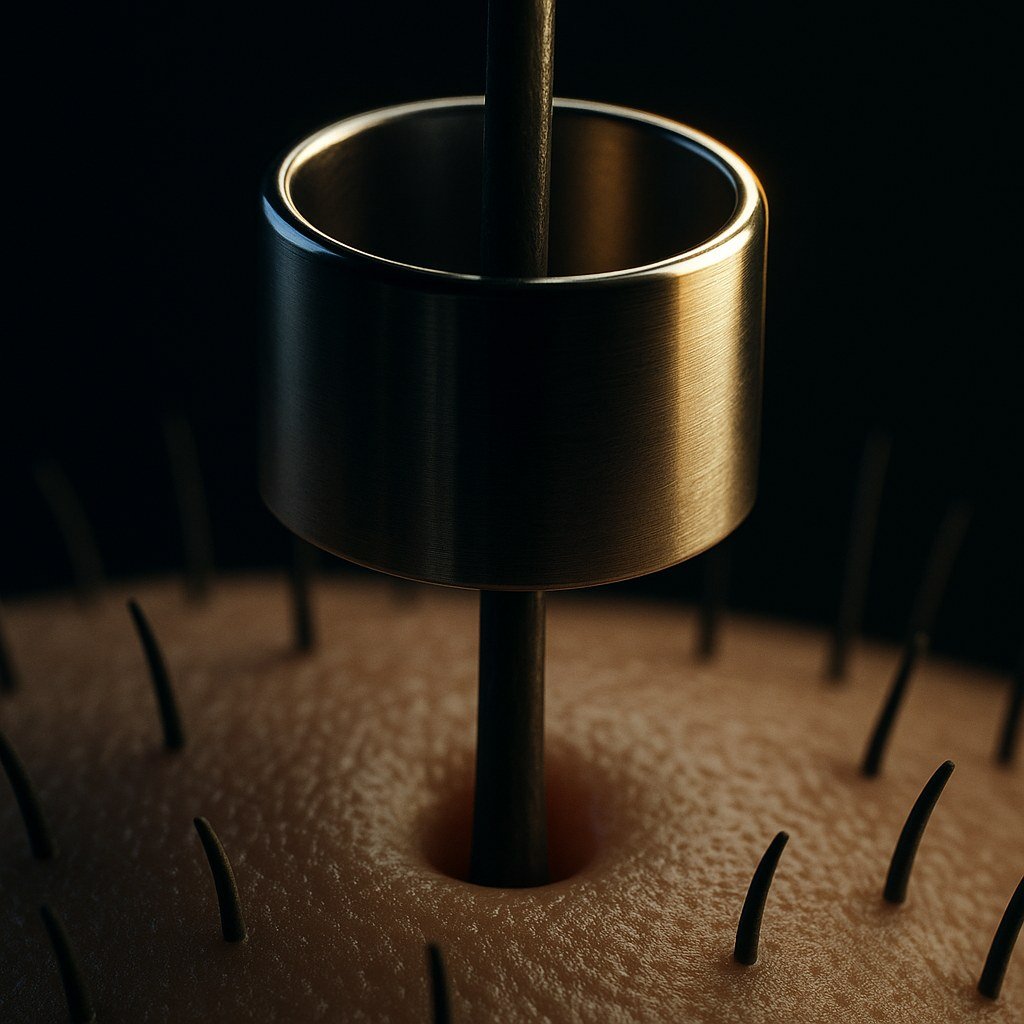
FUE hair transplant
Follicular units are removed one at a time with a sub-millimetre punch and placed individually. No strip, no linear scar, and nothing about your haircut has to change afterwards.
Explore FUE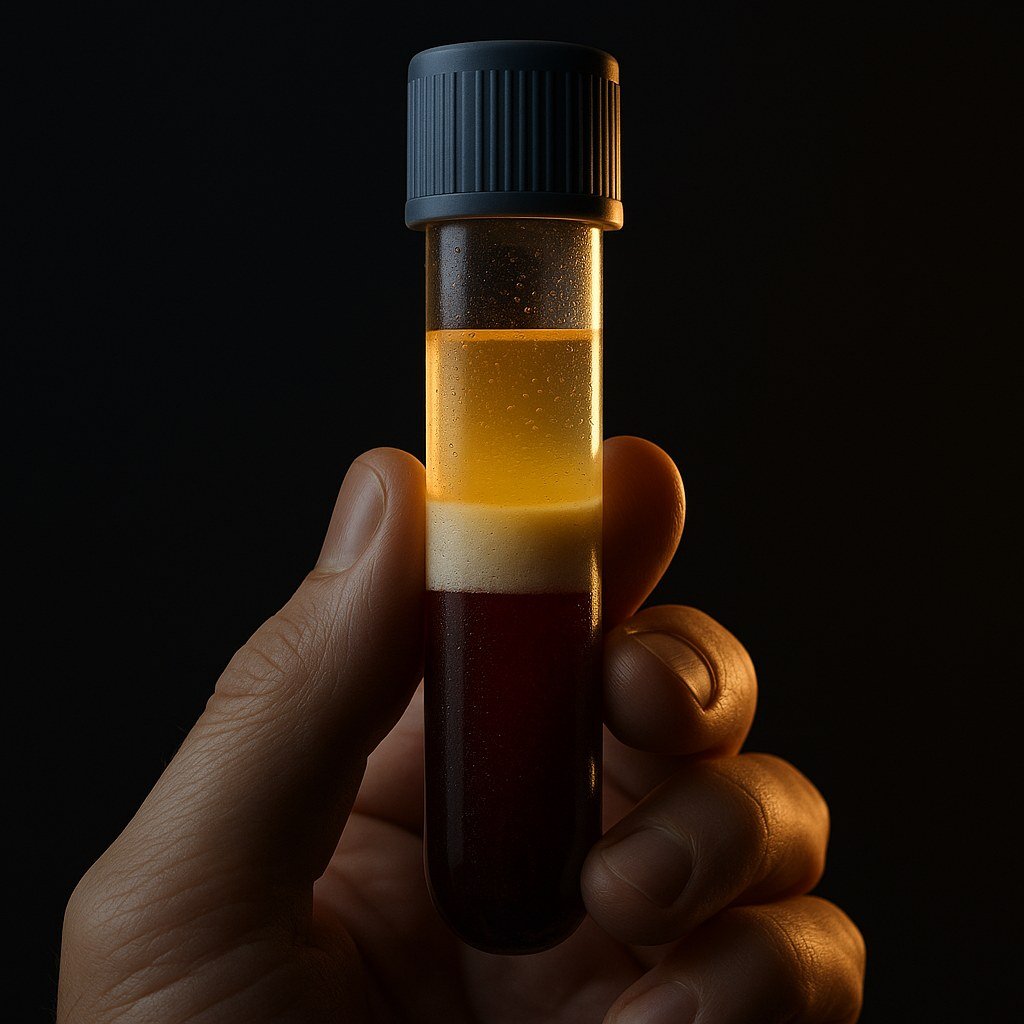
PRP therapy
Platelet-rich plasma, drawn and concentrated from your own blood, used to support existing follicles. It is not a substitute for surgery — it protects what you have not lost yet.
Explore PRPFour reasons this is the method we use.
Older strip harvesting removes a band of scalp and closes it with sutures, leaving a permanent line. FUE does not.
Oak Brook Hair Transplant performs FUE. Strip harvesting is shown for comparison only and is not offered here.
What FUE actually involves
Three stages, one day, local anaesthetic throughout. You are awake for all of it.
What happens
Individual follicular units are removed from the donor zone with a sub-millimetre punch, leaving scattered dot scars rather than a line.
Why it is slow
Each unit is taken one at a time. That is the cost of avoiding a strip, and it is why FUE is labour-intensive.
The risk to manage
Over-harvesting. Taking too much from one area is the single mistake that cannot be undone.
What happens
Tiny recipient sites are made across the thinning area, each at a specific angle and direction.
Why it decides the result
Angle, direction and density are what make a hairline read as natural rather than planted. This is design work.
Who should do it
It is the stage where a physician’s judgement most directly determines the result. Ask any clinic who performs it.
What happens
Grafts are placed into the prepared sites, sorted so single-hair units sit at the leading edge and denser units sit behind.
Then you wait
The new hairs shed at two to four weeks. That is normal, it alarms everyone, and it is not failure.
Final result
Regrowth starts around three to six months. Final density lands at twelve to eighteen months.
Find out where you actually stand.
Five questions on your pattern, your donor area and how fast things are moving. You get a straight read on candidacy — including if the answer is “not yet.”
Educational only. Not a diagnosis, not a quote, and not a substitute for examination by a physician.
Suite 205C, West 22nd Street.
A real address you can drive to, in a building you can walk into before you commit to anything. That sounds like a low bar until you have compared it against booking surgery in another country.
Oak Brook Hair Transplant
2425 W 22nd St Ste 205C, Oak Brook, IL 60523Patients travel to us from across DuPage, Cook, Will, Kane and Lake counties. See the areas we serve.
Questions people actually ask
Talk to us before you decide anything.
A consultation is an examination and a plan, not a sales appointment. If you are not a good candidate, we would rather tell you that than operate.