
PRP Therapy Explained
Platelet-rich plasma is drawn from your own blood and used to support follicles that are thinning but not yet gone. What it is not is a replacement for surgery.
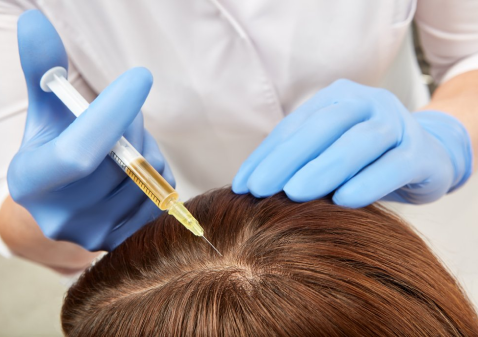
PRP begins with an ordinary blood draw. The sample is spun in a centrifuge, which separates it by density: red cells settle at the bottom, a thin pale band of platelets forms above them, and straw-coloured plasma sits on top. That platelet-rich fraction is what gets injected into the thinning areas of the scalp.
The rationale is that platelets carry growth factors, and concentrating them around struggling follicles supports the growth cycle. Because the material comes from you, there is no question of rejection or donor matching.
The important limit: PRP cannot regrow hair on skin that has been bald for years. Once a follicle is gone it is gone, and no injection brings it back. What PRP can plausibly do is support follicles that are still alive but miniaturising — producing progressively finer, shorter hairs rather than none at all.
That makes it useful in two situations. First, as part of a plan to hold on to native hair. Second, alongside a transplant, supporting the surrounding hair that was not moved. If anybody offers it to you as an alternative to surgery for advanced loss, be sceptical.
It is also not permanent. Any benefit lasts as long as the treatment is maintained, because the underlying genetic process continues regardless. Expect scalp tenderness for a day or so after a session, and expect any change to show up over months rather than weeks — usually as reduced shedding before visible new growth.
PRP is not suitable for everyone. Certain blood disorders and medications rule it out, which is why suitability is decided at consultation rather than from a website.
Reviewed by Dr Jawdat Abboud, MD. Educational content — not a diagnosis and not a substitute for examination by a physician. Individual results vary.
Where do you actually stand?
Five visual questions, about two minutes, and a straight read on candidacy.
Comments
9 responses to “PRP Therapy Explained”
[…] offer effective solutions for those hesitant about invasive procedures. Popular methods like PRP therapy and scalp micropigmentation provide noticeable results without downtime. These treatments use […]
[…] options like PRP therapy, microneedling, and topical solutions have revolutionized the approach to hair restoration. These […]
[…] like PRP therapy and medication focus on revitalizing hair from the roots. This proactive approach not only enhances […]
[…] thickness and density over time. It’s a safe, minimally invasive option. Many choose PRP therapy for its gradual, natural-looking results without the need for surgery. This approach works best for […]
[…] like PRP therapy and medication focus on revitalizing hair from the roots. This proactive approach not only enhances […]
[…] to modern techniques, recovery time has been significantly reduced. Non-invasive treatments like PRP therapy involve little to no downtime, allowing you to resume daily activities almost immediately. Even […]
[…] PRP therapy is minimally invasive and requires little downtime, making it an attractive option for those with busy lifestyles. Most patients experience no side effects, and results typically appear after a few sessions. With consistent treatment, PRP can help restore volume and thickness to your hair, leaving you with a more youthful and fuller hairline. […]
[…] options like PRP therapy and low-level laser therapy are becoming popular for those seeking hair restoration without […]
[…] follicles to areas where growth has thinned, offering a permanent solution for advanced hair loss. PRP therapy, however, focuses on stimulating natural growth by injecting platelet-rich plasma from your blood […]