
The Norwood scale
The standard way surgeons describe male pattern hair loss. Seven stages, from barely-there temple recession to a horseshoe rim. It is shorthand for a pattern — useful for discussion, not a treatment plan on its own.
The renders below show the same head at each stage, viewed from above so the hairline and the crown are both visible.
Seen from above
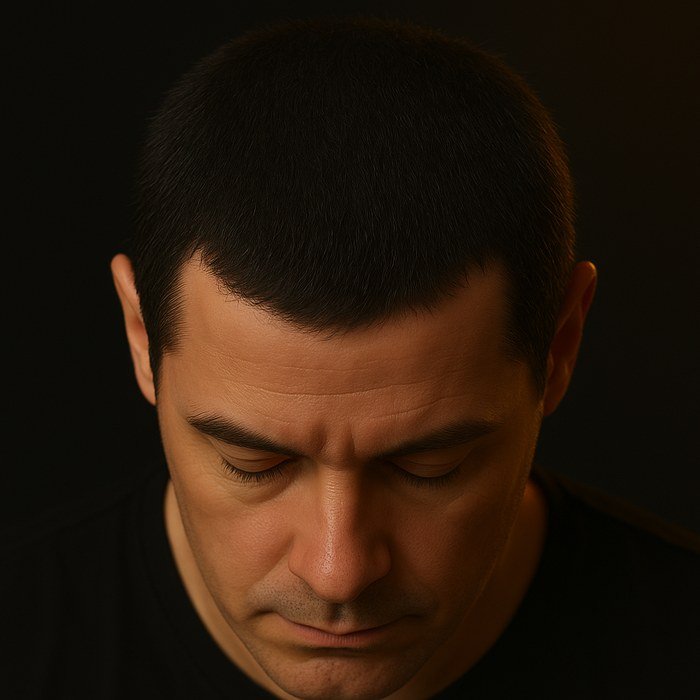
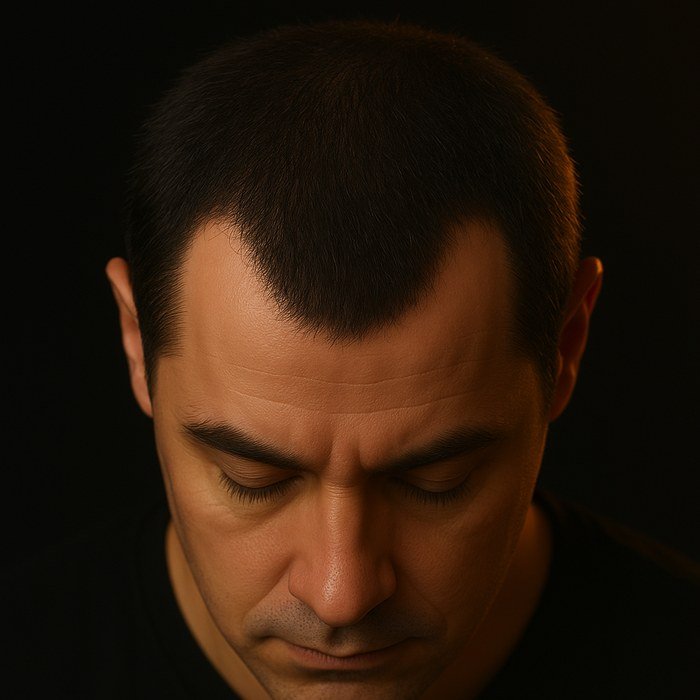
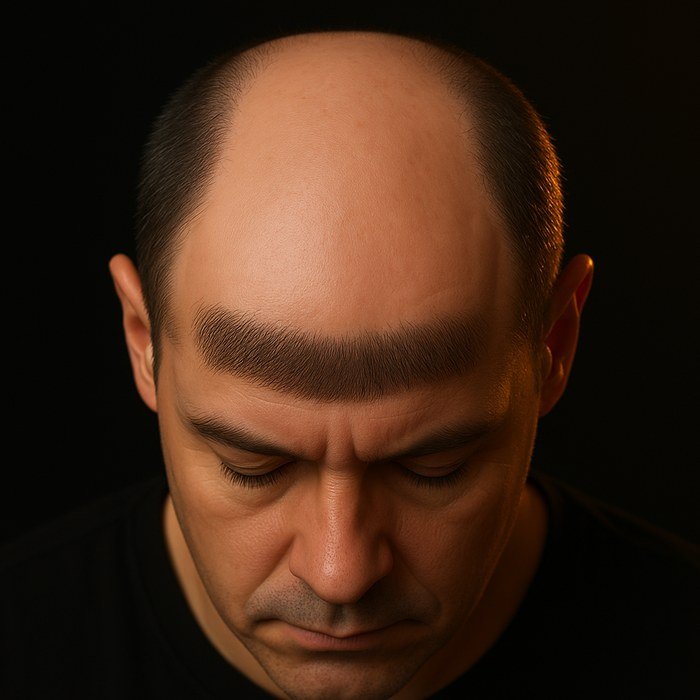
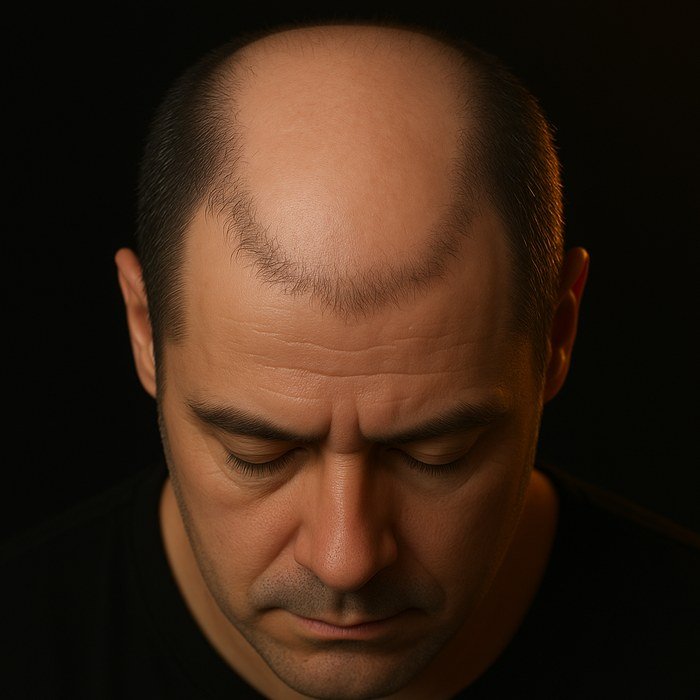
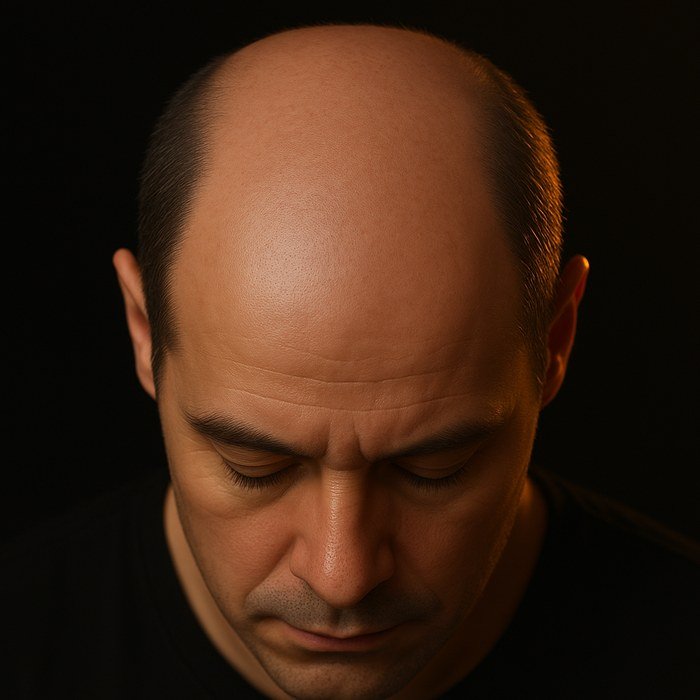
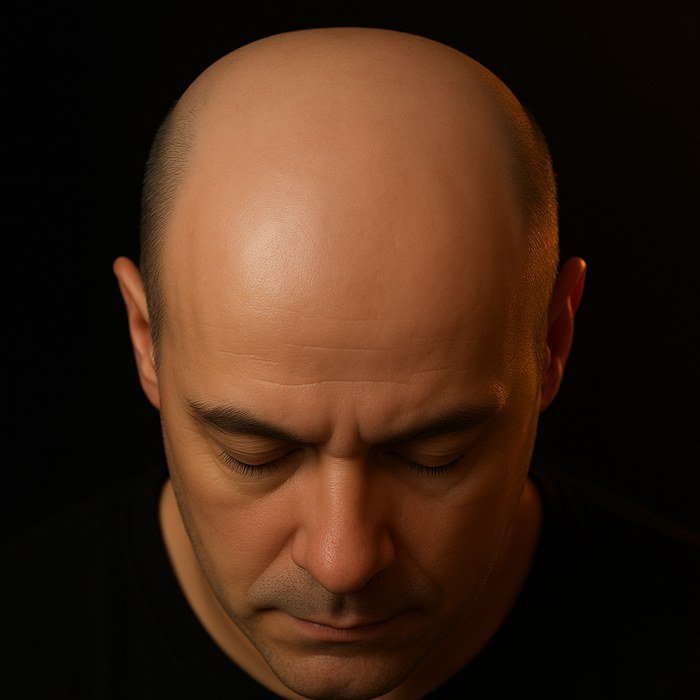
Illustrative 3D renders, not patient photographs.
The stage is not the plan
Two men at the same Norwood stage can have completely different options, because the scale describes what has been lost and says nothing about what is available to move. Donor density, hair calibre, scalp laxity and how fast the pattern is still progressing all matter more.
Published guidance in the ISHRS Hair Transplant Forum International describes a typical safe lifetime donor supply of roughly four to eight thousand follicular units, and cautions that removing more than twenty to thirty percent from a single zone in one session risks permanent visible thinning. At the higher Norwood stages the arithmetic gets tight quickly, which is why coverage is prioritised rather than promised.
The other thing the stage cannot tell you is whether the pattern has stabilised. Operating into rapidly advancing loss is one of the most reliable ways to end up with an island of transplanted hair and a widening gap behind it.
Questions
Sources: ISHRS — Safe Donor Follicle Harvesting in FUE · American Academy of Dermatology
Related
Place yourself on the scale in two minutes.
The assessment uses the same renders and gives you a straight read on candidacy.