
Shock loss
Two things shed after a transplant, and confusing them causes a great deal of unnecessary panic. One is completely expected. The other is common, usually temporary, and worth understanding in advance.
Two different sheds
Normal transplant shedding. The hairs you had placed fall out between weeks two and four. The follicle stays anchored and enters a resting phase before producing a new hair. This is not a complication — it is the cycle, and it happens to essentially everyone.
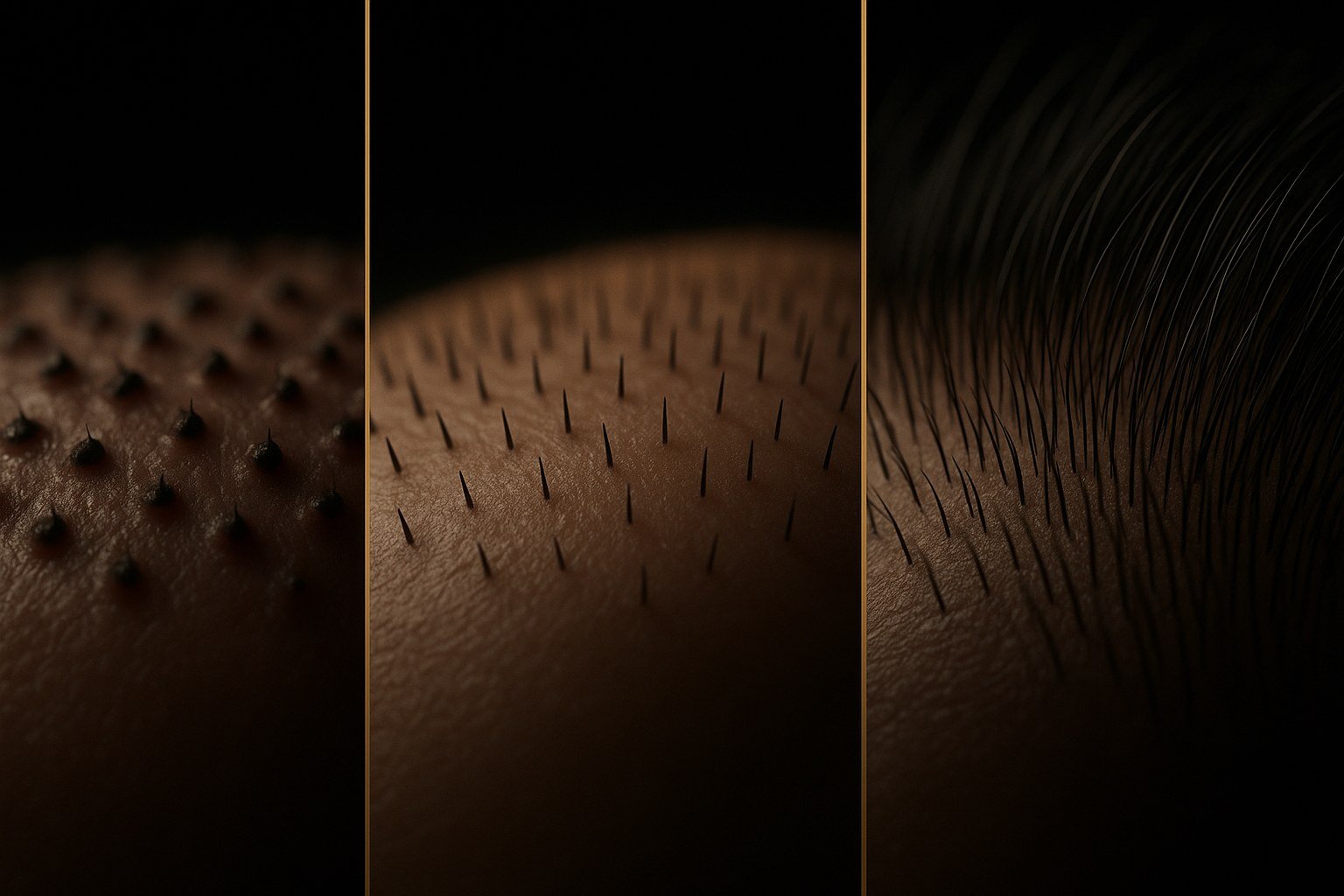
Shock loss. Native hair around the treated area sheds too, pushed abruptly into the resting phase by the trauma of nearby surgery. It is common, it is generally temporary, and it typically recovers over three to six months.
The reason the combination is distressing is timing: both peak around the same few weeks, so month one can look worse than the day before surgery. This is why understanding the timeline in advance matters more than almost any other piece of preparation.
Factors that matter
How miniaturised the native hair was
Hair already far into the miniaturisation process is the least likely to recover. Robust native hair almost always does.
Site placement
Careful spacing of recipient sites reduces trauma to existing follicles.
Medical stabilisation
Native hair already protected medically before surgery tends to weather it better.
Time
Three to six months is the usual recovery window. Judging anything before that is premature.
Questions
Sources: American Academy of Dermatology · ISHRS Consumer Advocacy
Related
Month one is the hard part. Then it turns.
We set the expectation before surgery, not after, so week four is not a surprise.