
The recovery timeline
The first year has a shape, and knowing it in advance removes most of the anxiety. The single most important thing to understand: the hair falls out before it grows, and that is normal.
What to expect
Days 1 to 3. Tight, sore, and often swollen across the forehead. Most people describe it as a bad sunburn rather than pain. Sleep elevated. Over-the-counter pain relief is usually sufficient.
Days 7 to 10. Crusts around the graft sites lift and clear. Grafts are anchored by this point. Most desk-based patients are presentable before this.
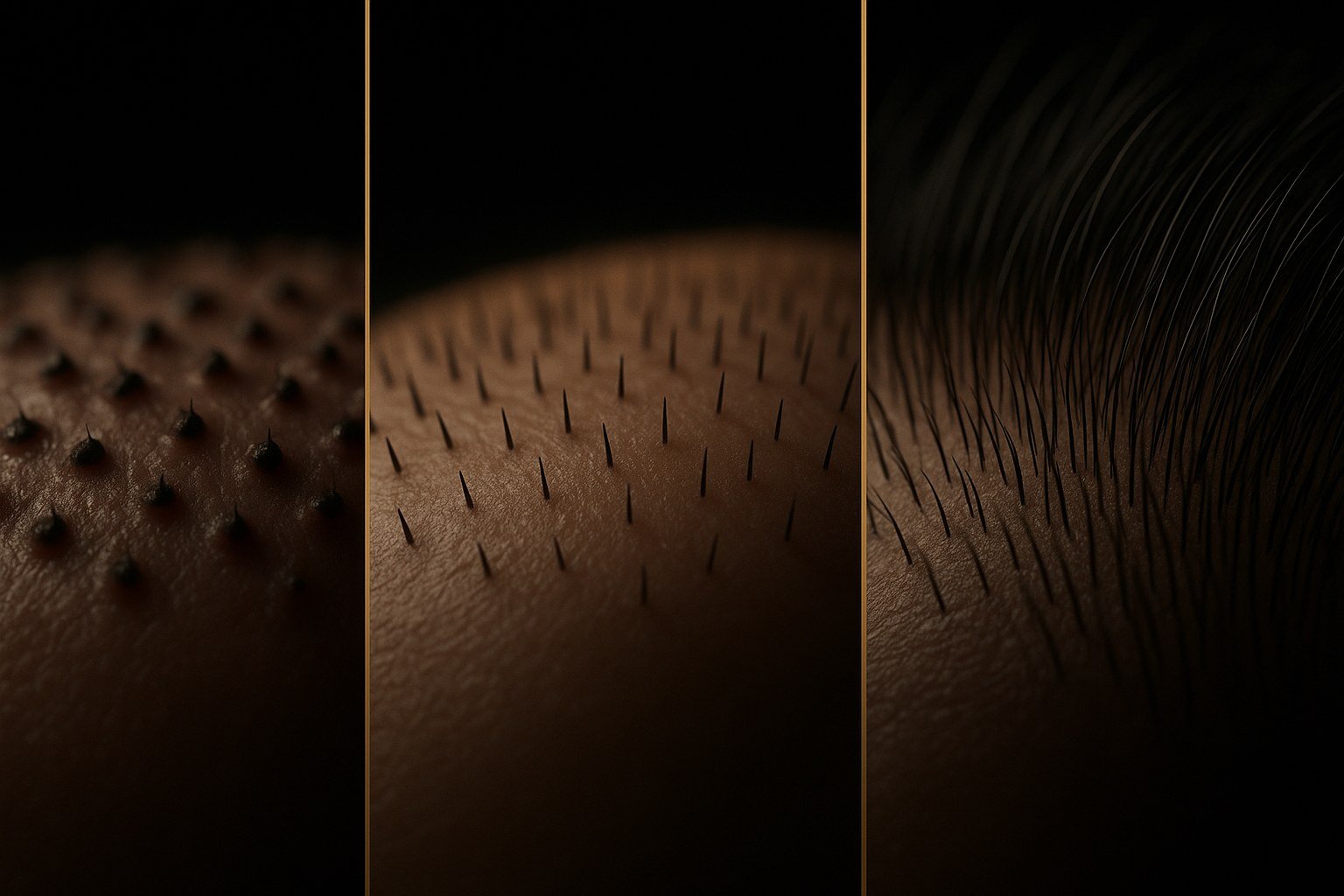
Weeks 2 to 4. The transplanted hairs shed. This is the stage that generates the panicked phone calls, and it is a normal part of the cycle — the follicle remains and enters a resting phase.
Months 3 to 6. New growth appears, fine and wispy at first, and unevenly. Some areas run ahead of others.
Months 6 to 9. Density builds and the result starts to look like something. This is where most people stop worrying.
Months 12 to 18. Final density and texture. Anyone promising a finished result at six months is selling.
The first two weeks
Sweat and heat
No gym, sauna or steam room for roughly two weeks. Sweat irritates healing skin and raises infection risk.
Pressure and friction
No hats that grip, no sleeping face-down, and nothing rubbing the recipient area.
Picking
Let crusts lift on their own. Picking one off can take a graft with it.
Direct sun
Keep the healing scalp out of strong UV for several weeks.
Questions
Sources: American Academy of Dermatology · ISHRS Consumer Advocacy
Related
Recovery is easier when you know the shape of it.
We walk through the whole timeline at consultation, including the shedding phase, so month three does not come as a shock.