
Hairline design
Technique gets grafts to survive. Design decides whether anyone can tell. It is the part of the procedure that is closest to drawing, and it is where results are won or lost.
Irregular, graded, and angled
A natural hairline is not a line. Look closely at one that has never been touched and you find an irregular, broken transition zone — sentinel hairs scattered ahead of the main edge, small variations in and out, no symmetry between left and right.
It is also graded. The leading edge is built from single-hair units only. Two- and three-hair units start a few millimetres back, and density builds gradually. Put a three-hair graft at the front edge and it reads as a tuft, no matter how well it grows.
And it is angled. Hair leaves the scalp at a shallow slant, not perpendicular, and every hair in a region flows the same way. Angle is set when the recipient site is made, which is why site creation is the stage that determines the outcome.
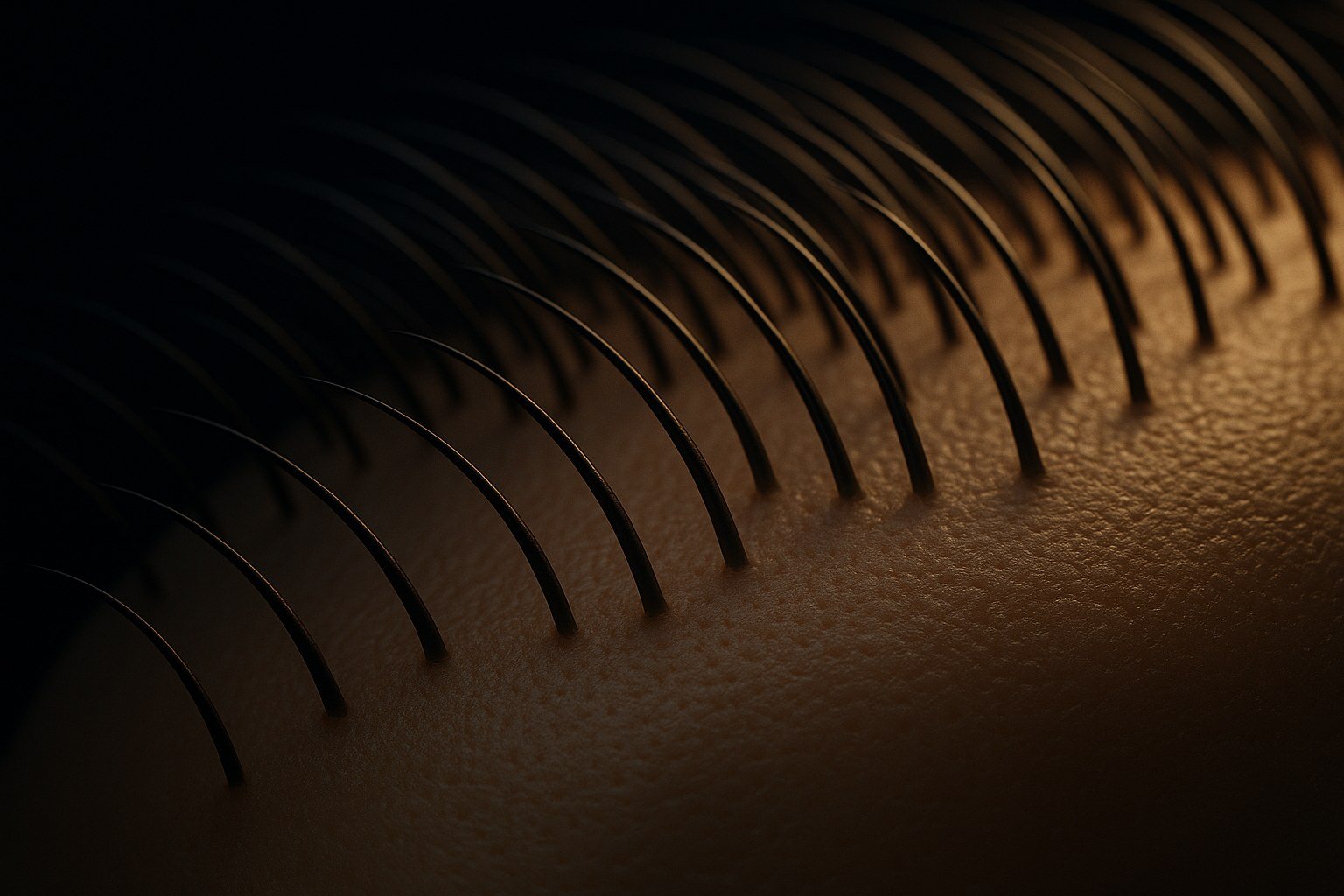
The four tells
Too straight
A ruler-straight edge reads as artificial instantly, because nothing in nature produces one.
Too low
A youthful hairline on a face that will keep ageing, using donor supply that will be needed behind it.
Wrong angle
Hair standing up rather than lying forward. Impossible to style around and impossible to fix easily.
Grafts too coarse at the front
Multi-hair units at the leading edge produce visible tufting — the modern version of the old plug look.
It has to age
The hairline being designed is not for you now. It is for you at sixty, when the hair behind it has thinned further. That is why a conservative, mature placement is usually the right call even when a lower one is technically achievable today.
This is also where the donor arithmetic re-enters. A low, dense hairline consumes a large share of a finite supply for a single zone. Designing it means deciding, deliberately, what you are choosing not to do later.
Questions
Sources: ISHRS Consumer Advocacy · American Academy of Dermatology
Related
Design is a conversation, not a menu.
Bring photographs from five and ten years ago — they show where the pattern is heading, which is what the design has to survive.