
One follicleat a time.
No strip. No linear scar. The same technique restores a hairline, a crown, an eyebrow or a beard — what changes is the craft, not the method.
A graft is not a hair.
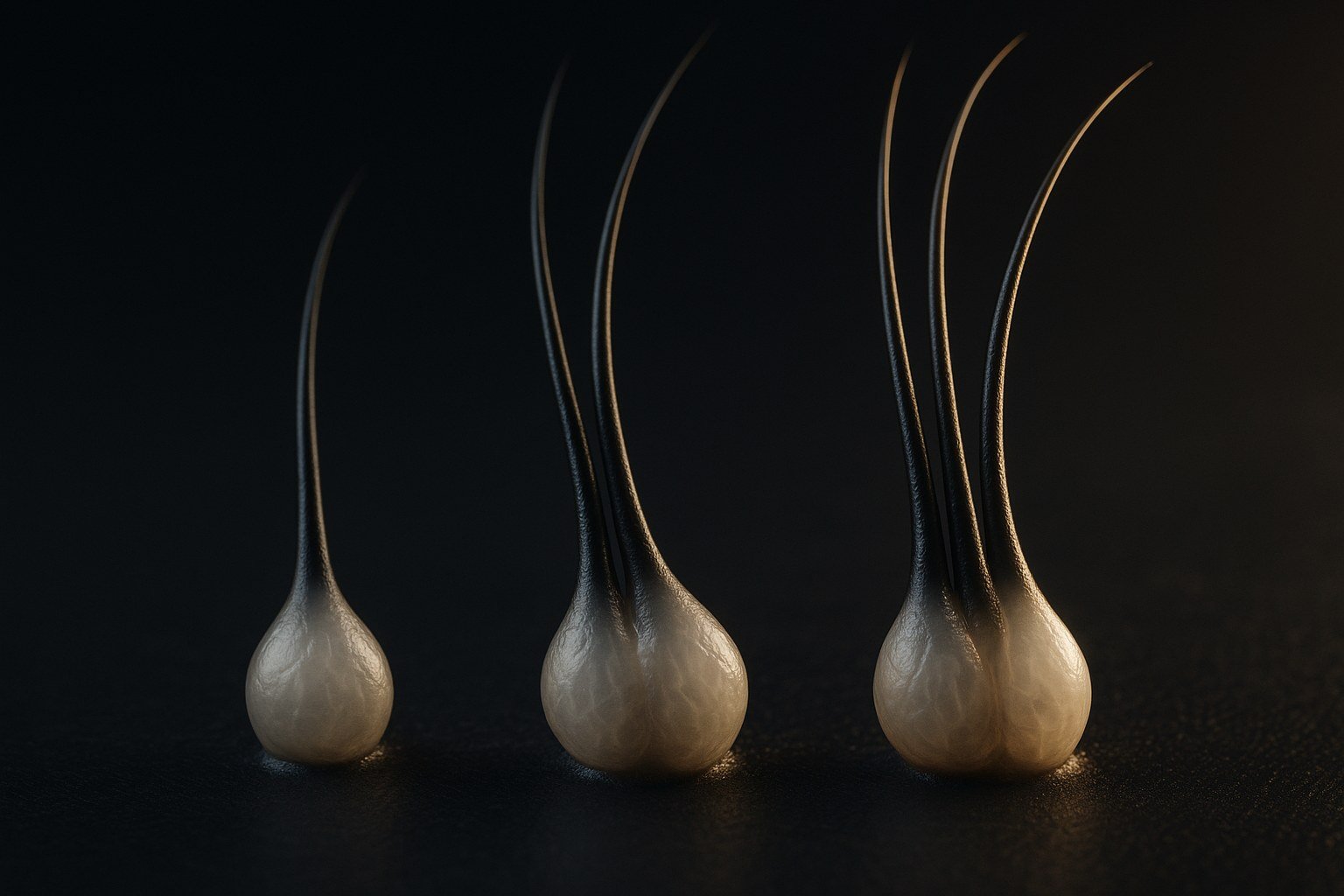
Hair does not grow as isolated strands. It grows in natural clusters of one to four follicles, called follicular units. That is what gets moved — the whole unit, intact, with its bulb and sheath.
It is why graft counts and hair counts are different numbers, and why a clinic quoting you “hairs” rather than grafts is muddying the comparison. Most people average a little over two hairs per graft.
Single-hair units go at the leading edge of the hairline. Denser two- and three-hair units sit behind them, building volume where it cannot be seen individually. That ordering is most of what makes a hairline look real.
One technique. Seven applications.
FUE is not a menu — it is a single method of harvesting and placing follicular units. What changes from one area to the next is which units are used, at what angle, and in what order. Five of these are on the scalp. Two are on the face.
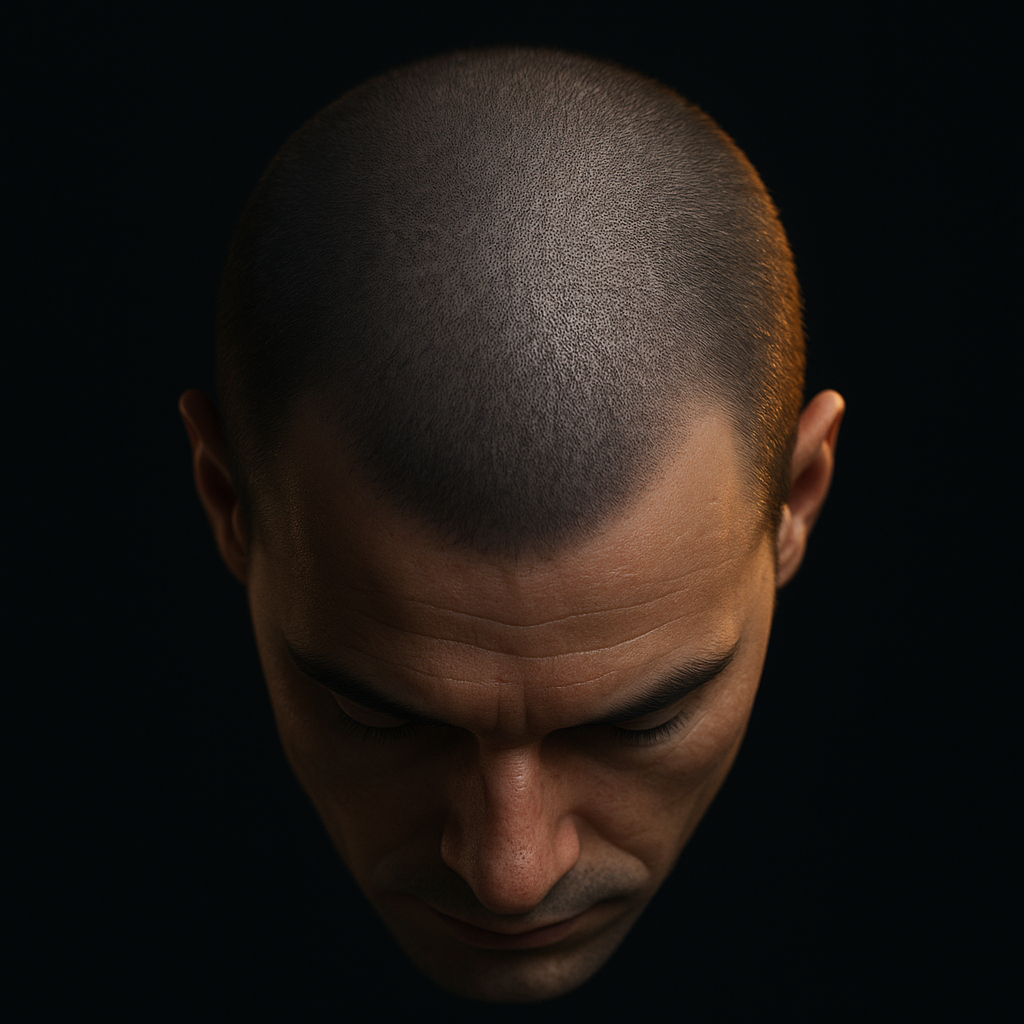
Looking down at the top of the head. Tap an area to add or remove it.
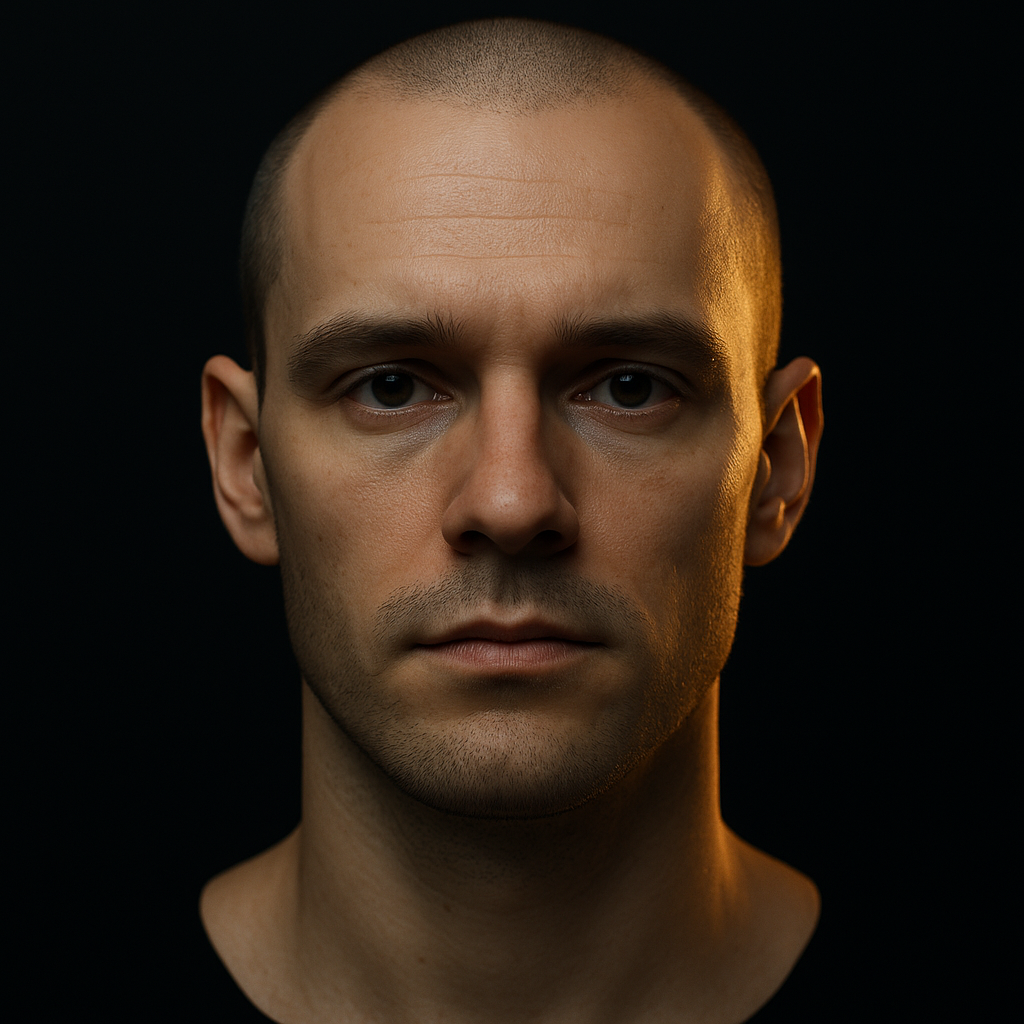
Facing forward. Eyebrows and beard. Tap an area to add or remove it.
What stays the same
Every one of these is the same procedure: individual follicular units taken from the safe donor zone at the back and sides, one at a time, under local anaesthetic, with no strip and no linear scar.
What changes
Graft type, angle, direction and density. A hairline takes single hairs at a shallow angle; a beard takes single hairs at a sharp downward one; a crown takes multi-hair units laid to follow a spiral. Same technique, different craft.
We do not perform FUT (strip) or DHI. Facial and scalp grafts draw on the same finite donor supply, so if you may want more than one area, the order matters.
Frontal hairline
The leading edge that frames your face. Built from single-hair units so the transition reads as natural.
Plan this areaTemples
The two receding corners. Small in area, but they do a lot of the work in framing the face.
Plan this areaFrontal third
Directly behind the hairline. Usually the first priority, because it frames the face.
Plan this areaMid-scalp
The bridge between front and crown. Where a narrowing band shows up at Norwood 4 to 5.
Plan this areaCrown / vertex
A whorl on a curved surface, so gaps show from more angles. Consumes far more grafts than people expect.
Plan this areaEyebrows
Rebuilt one hair at a time, at an angle so flat the hair lies against the skin. Commonly published at roughly 250 to 400 grafts per brow.
Brow hair is transplanted from the scalp, so it keeps growing like scalp hair and needs trimming. That is normal, and it is the trade-off nobody mentions.
Plan this areaBeard
Cheeks, jawline, chin and moustache, filled with single-hair grafts placed at a sharp downward angle. A full beard is commonly published at roughly 1,500 to 3,000 grafts; a goatee or patch is far fewer.
Beard grafts come out of the same finite scalp donor supply as your hairline. If you may want both, the order matters, and it is worth deciding before either.
Plan this areaNot sure which of these applies to you?
Map it on the planner, or start with the assessment and let the answer come out of your own pattern.
Three stages, one day.
Local anaesthetic throughout. You are awake, you can talk, and most people watch something or sleep.
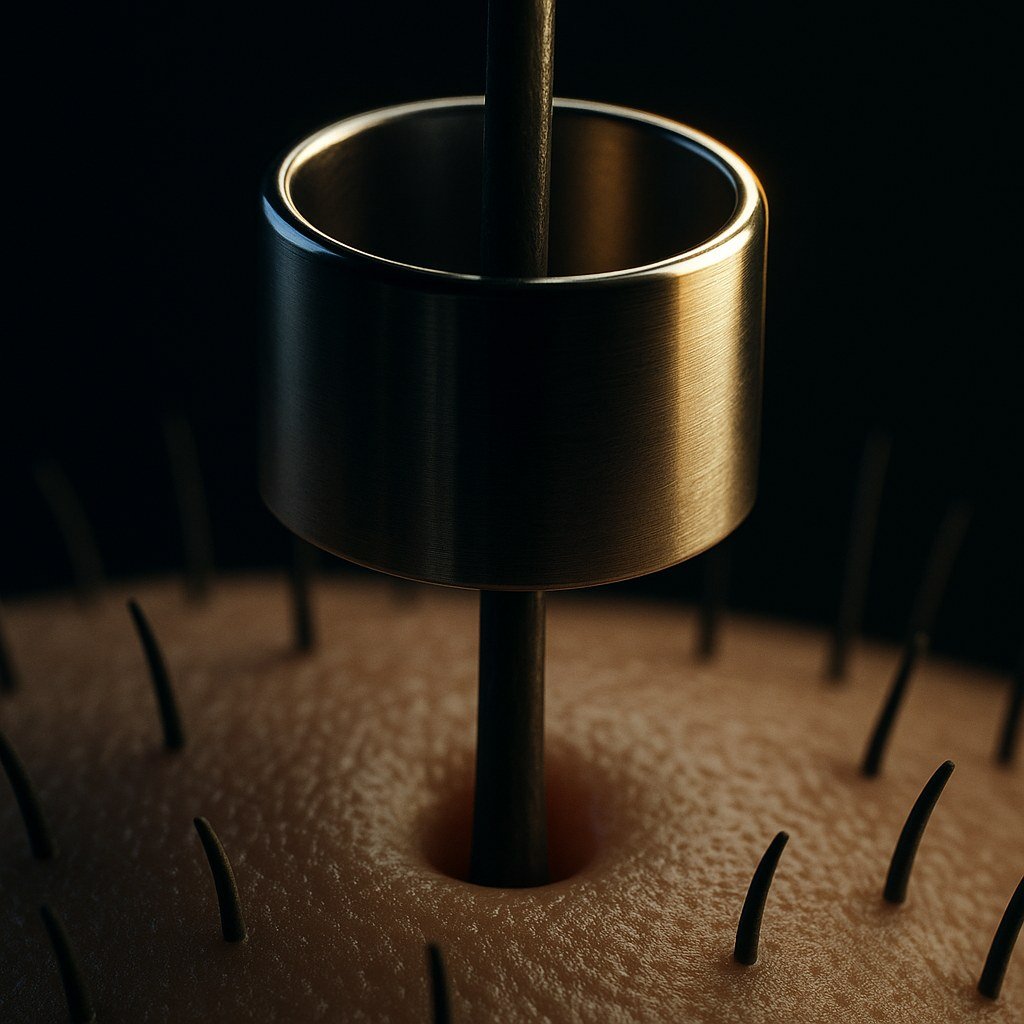
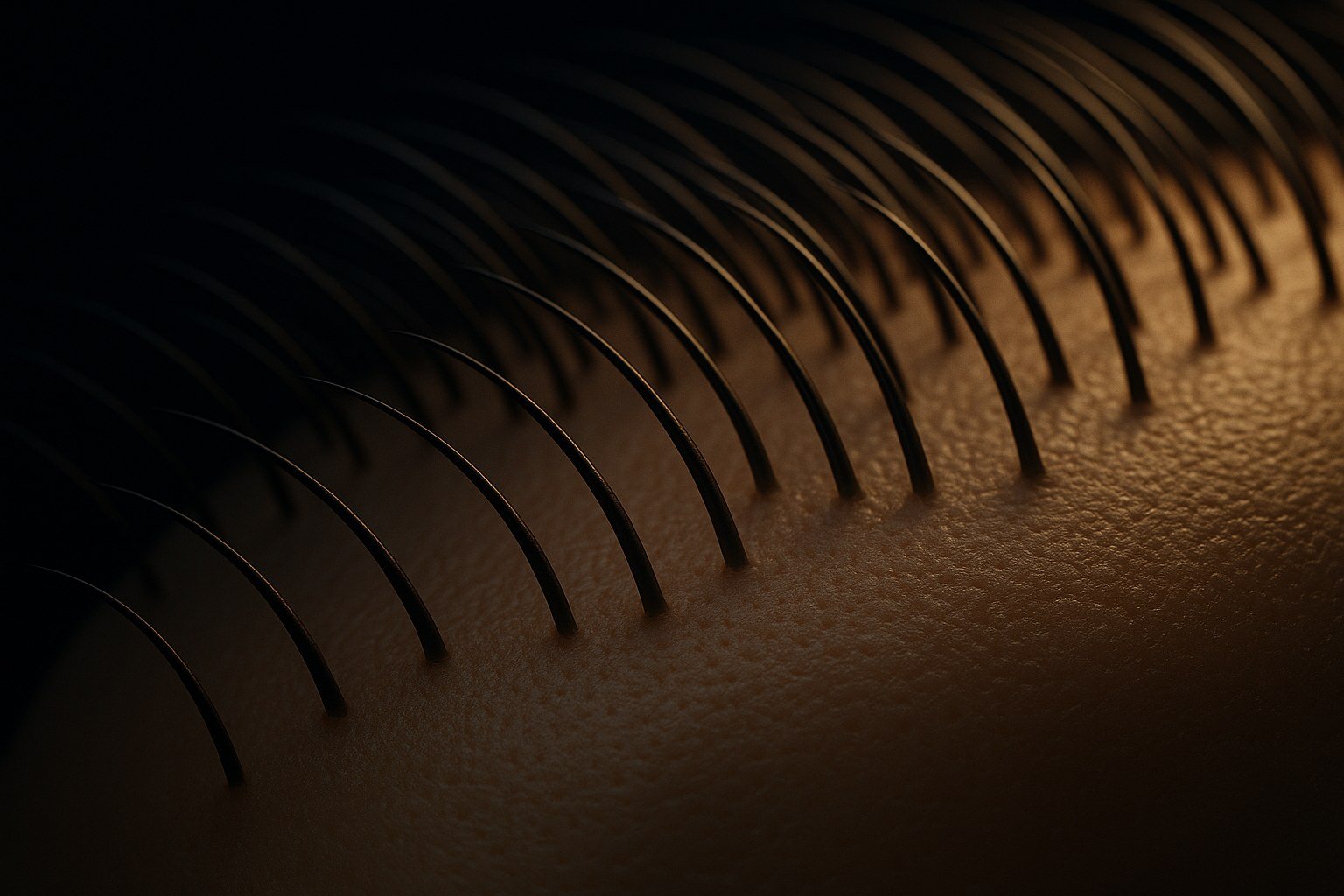
Taking only what can be spared
A punch under one millimetre isolates each unit at the skin surface. Extraction is spread across the donor zone rather than concentrated, so density never drops visibly in one patch.
Published ISHRS guidance warns that removing more than twenty to thirty percent of follicular units from a single zone in one session risks permanent thinning. Spreading the harvest is not a nicety — it is the whole discipline.
Where the result is decided
Recipient sites are made at a specific angle, direction and depth. Hair leaves the scalp at a shallow slant, not straight out, and it all flows the same way. Get the angle wrong and the hair will never sit right no matter how many grafts go in.
This stage is design work, and it is where a physician’s judgement matters most.
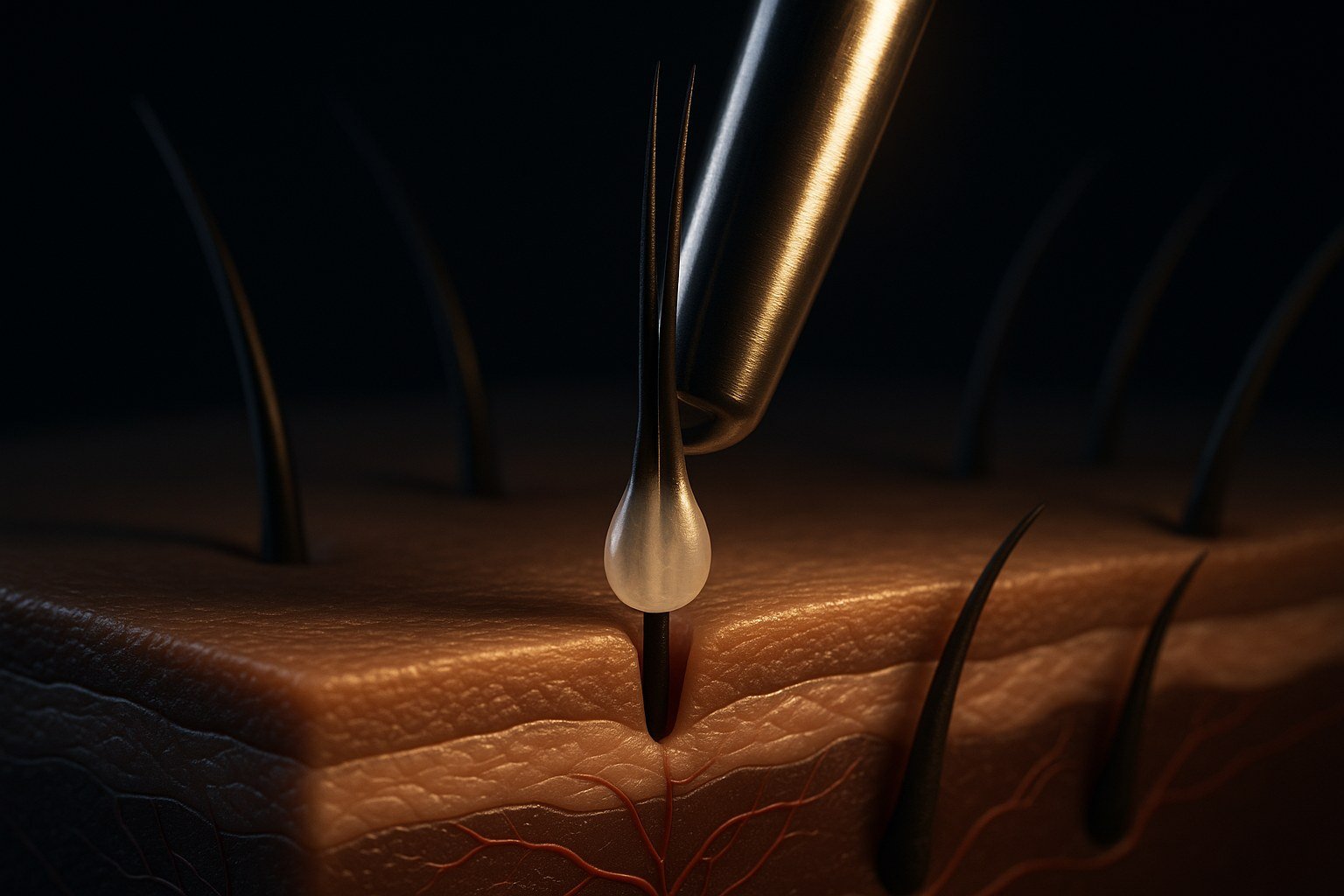
Sorted, then placed
Units are sorted by how many hairs they carry, then placed to match the plan — singles forward, multiples behind. Grafts are out of the body for as little time as possible.
Then you wait, and the waiting is the hard part.
The first year, honestly.
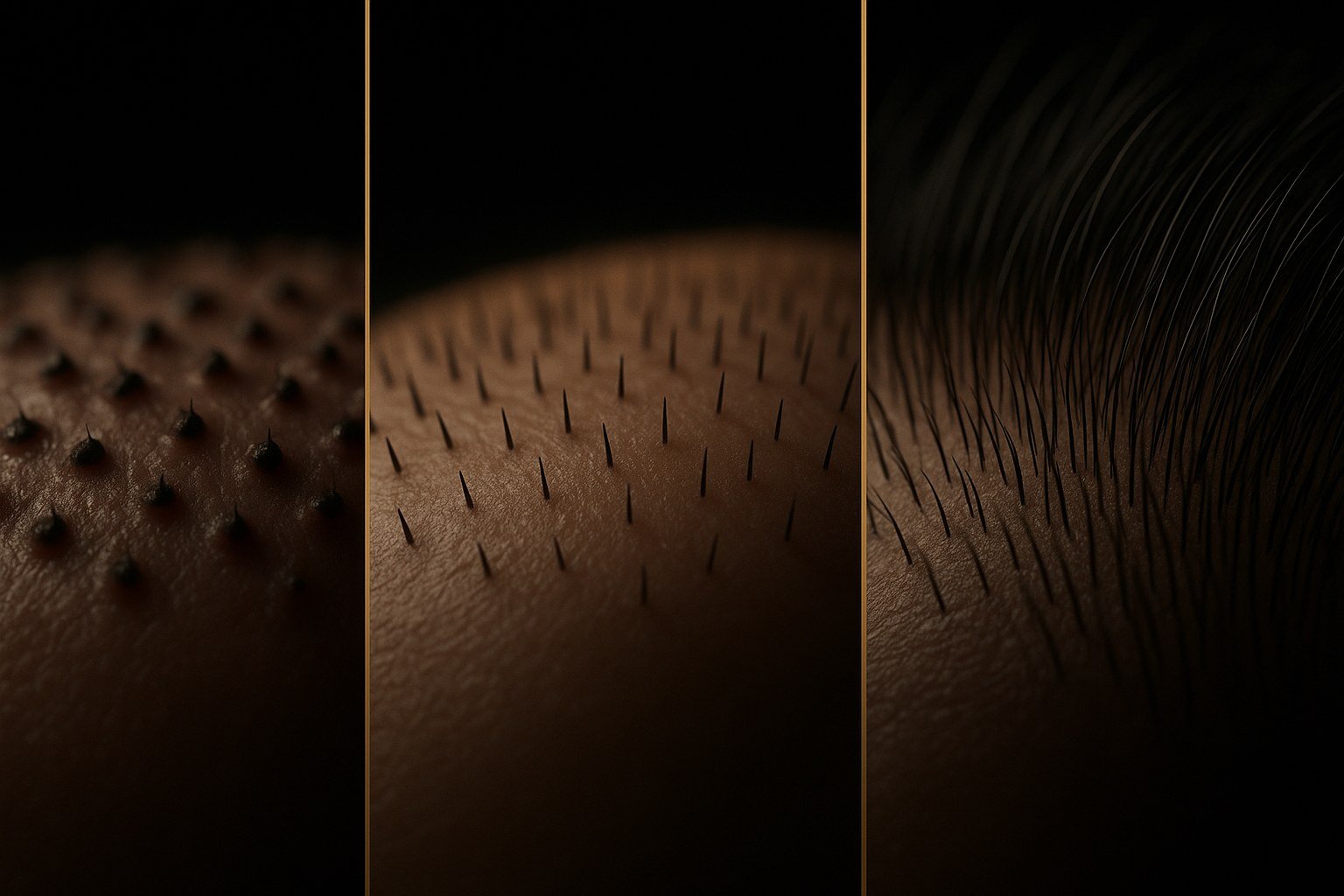
Sore, tight, swollen
Like a bad sunburn. Sleep elevated. Over-the-counter pain relief is usually enough.
Crusts clear
Grafts are anchored. Most people are presentable at a desk before this.
It all falls out
The transplanted hairs shed. This alarms everybody and it is completely normal. The roots stay.
Regrowth starts
Fine, wispy hairs appear and thicken. Uneven at first.
It starts to look like something
Density builds. This is where most people stop worrying.
Final density
The real result. Anyone promising you this at six months is selling.
Who this is not for.
Surgery is the wrong first move for a meaningful share of the people who ask about it. The usual reasons:
Loss that is still moving fast
Grafts placed into an actively receding pattern leave an island of transplanted hair with a gap opening behind it. Medical stabilisation usually comes first — sometimes for a year or more.
A donor zone that is thinning too
Diffuse thinning at the back and sides caps what is safely possible. This matters far more than how large the bald area is.
Active scalp disease or scarring alopecia
Inflammatory and autoimmune conditions can reject or destroy grafts. These need diagnosis and treatment, not surgery.
Expectations that cannot be met
A transplant redistributes the hair you have. It does not create new hair, and it will not restore the density you had at twenty.
FUE questions
Start with an examination.
Not a quote, not a graft number over the phone. An examination, under magnification, by Dr Abboud.